
Dam Safety in America: Engineering Aging Structures That Earned a D+
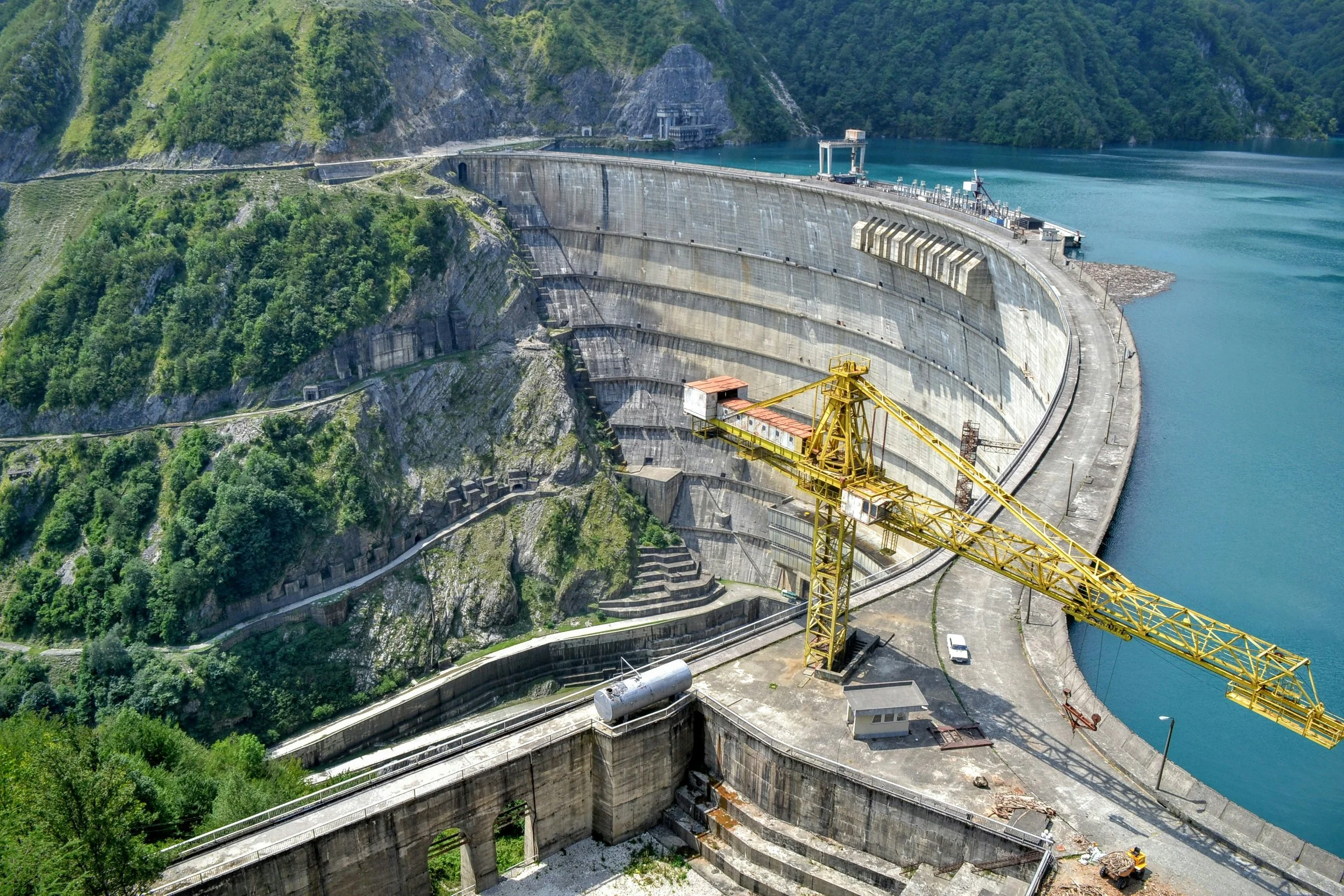
There are more than 92,000 dams in the United States. Most Americans don't think about them unless one fails. But these structures sit upstream of towns, farms, roads, and homes across every state, quietly performing the work of holding back water that would otherwise flow wherever gravity takes it. They store drinking water. They prevent floods. They generate electricity. And the majority of them were built more than 50 years ago, designed to standards that predate the communities that have grown up below them.
In March 2025, the American Society of Civil Engineers released its once-every-four-years report card on the state of American infrastructure. Dams received a D+. That grade has hovered between D and D+ for every report card ASCE has issued since 1998. It has never been higher. And the data underneath it is worth understanding, because it doesn't just describe old structures sitting quietly in the countryside. It describes a growing risk that more Americans are exposed to today than they were a decade ago, for reasons that have as much to do with who built houses near a dam as with the condition of the dam itself.
This post explains what the D+ grade actually means, what the numbers look like on the ground, what engineers do to assess and rehabilitate aging dams, and what it means for homeowners, developers, and communities that live downstream.
1. The Scale of the Problem
Let's start with three numbers that frame everything else.
92,000+
The number of dams in the United States. They generate electricity, store drinking water, control floods, and support agriculture across every state in the country.
64 years
The average age of an American dam. Seven out of ten dams in the country have already passed the 50-year mark, which is roughly the design life many of them were originally built for.
17,000
The number of dams in the U.S. classified as high-hazard potential, meaning that if one of them failed, the likely result would be loss of life downstream.
High-hazard potential doesn't mean a dam is in bad shape. It means the consequences of failure would be severe, primarily because of what's been built downstream in the decades since the dam went in. A dam that was classified as low-hazard when it was built in 1965, because a rural field sat below it, may be reclassified as high-hazard today because a subdivision, a school, and a shopping center now occupy that same floodplain. Engineers and dam safety officials call this hazard creep, and it's one of the most important drivers of the deteriorating national picture. The number of high-hazard potential dams has increased by 20 percent since 2012, driven almost entirely by downstream development, not by the dams themselves getting worse.
Of those 17,000 high-hazard dams, approximately 2,500 of them, about 15 percent, are in poor or unsatisfactory condition. That means a structure with the potential to kill people downstream is also physically deteriorating. That combination is the core of the dam safety problem in America.
What the Grade Actually Means
ASCE describes a D+ grade as infrastructure that is in fair to poor condition, mostly below standard, with many elements approaching the end of their service life. A large portion of the system exhibits significant deterioration. Condition and capacity are of serious concern with a strong risk of failure. Every report card ASCE has issued since 1998 has given American dams a D or D+. The grade has never improved beyond that. Progress has been made, but not nearly enough.
2. The Trend That Should Get More Attention
The most alarming data point in the dam safety picture isn't the grade. It's the trend in failures and emergency interventions.
Between 1994 and 2003, the United States recorded an average of three dam failures or emergency interventions to prevent imminent failure per year. From 2014 to 2023, that average surged to 76 per year. That's not a small statistical variation. That's a 25-fold increase over two decades. And roughly 80 percent of the 1,323 total failures and near-failures on record have occurred in the past 20 years.
3 per year → 76 per year
The change in dam failures and emergency interventions from the decade ending 2003 to the decade ending 2023. A 25-fold increase driven by aging infrastructure and more intense storms.
Two recent events illustrate what this trend looks like when it becomes real. In May 2020, the Edenville Dam in Michigan failed following a major rainstorm. The surge of water it released overtopped and destroyed the Sanford Dam downstream. About 11,000 residents had to be evacuated. More than 2,500 homes and structures were damaged. Total losses exceeded $200 million. No one died, but the failure was a direct result of deferred maintenance and a spillway capacity that hadn't been updated to meet modern standards.
In June 2024, the Rapidan Dam in Minnesota failed. In September 2024, Hurricane Helene caused the Lake Lure Dam in North Carolina to partially overtop, triggering evacuations. These aren't isolated incidents from different eras. They're recent, and they're part of an accelerating pattern.
The two drivers of that acceleration are predictable and have been visible for years. First, the dams are older. The longer an earthen embankment or a concrete gravity structure goes without significant maintenance or rehabilitation, the more likely it is to develop the internal seepage, spillway deterioration, or foundation erosion that precedes failure. Second, the storms are more intense. Heavier rainfall events, happening more frequently, push reservoirs to levels that spillways and emergency outlets weren't designed to handle. A dam designed in 1960 for a 100-year storm event may now face that design storm every 30 years due to changes in precipitation patterns. The structure's margin of safety, the buffer between what the dam can handle and what nature can throw at it, has narrowed.
3. The Money Gap
The Association of State Dam Safety Officials released a detailed cost estimate in March 2025. Rehabilitating all non-federal dams in the country to a safe, functional condition would cost approximately $165 billion. Addressing just the most critical dams, the high-hazard ones in poor condition, would cost $37 billion. Federal dams, which aren't included in that estimate, would add more on top.
ASCE estimates that the country needs $185 billion invested in dam infrastructure between 2024 and 2033 to meaningfully address the backlog. The amount actually allocated for that period, across all funding sources, is approximately $20 billion. That leaves a gap of roughly $166 billion over ten years.
$166 billion
The gap between what America's dams need over the next decade and what's currently funded. This is what deferred maintenance looks like at a national scale.
The Infrastructure Investment and Jobs Act, passed in 2021, directed approximately $3 billion toward dam safety. That was a meaningful step forward. But $364 million of it was later redirected for other purposes. The main federal grant program specifically designed to help states repair their highest-risk dams, the High Hazard Potential Dam Rehabilitation Grant Program, is set to expire at the end of 2026 if Congress doesn't reauthorize it.
On top of the funding gap, there's a staffing gap. On average, a single state dam safety official is responsible for overseeing 190 dams. At that ratio, staying current with inspection schedules, let alone taking enforcement action when violations are found, is functionally impossible for most state programs. As one state safety director put it: early intervention with dams depends on inspections, but most states can't keep up with the inspection schedules required by their own dam safety laws.
Who Owns These Dams?
About 96 percent of the country's dams are non-federal, meaning they're owned by states, municipalities, utilities, agricultural operators, private landowners, or corporations. That ownership structure matters because it determines where the responsibility for inspection, maintenance, and rehabilitation falls. Many small private dam owners lack the engineering resources or the financial capacity to maintain their structures properly. When a private dam fails, the downstream damage falls on communities and governments that had no control over the structure's condition.
4. What Engineers Actually Do to Assess and Fix a Dam
For most people, a dam is a structure you drive over or see from a boat. Understanding what's involved in keeping one safe, or deciding it can't be made safe, requires a bit more context about what these structures actually are and what can go wrong with them.
The main types of dams and how they fail
Earthen embankment dams are the most common type in the U.S. They're built from compacted earth and rock. The primary failure mechanisms are internal seepage, where water slowly works its way through the embankment; erosion of the downstream face; and overtopping, where water rises high enough to flow over the top of the dam during a flood event. Earthen dams don't have to fail all at once. Internal seepage can progress slowly for years, gradually piping material out of the embankment interior until a sudden breach occurs.
Concrete gravity dams rely on their own weight to resist the water pressure pushing against them. They can fail through foundation deterioration, cracking from temperature cycling and concrete chemical reactions, and overtopping. Many older concrete dams have experienced a phenomenon called alkali-silica reaction, a slow chemical expansion within the concrete itself that causes cracking and can compromise structural integrity over decades.
Spillways and outlet works are the mechanical systems that control how water is released from a reservoir. When a dam can't release water fast enough during a flood, water rises until it overtops the dam crest, the most common trigger for catastrophic failure. Many aging dams have spillway capacities that were calculated using historical rainfall records that significantly underestimate the storms these structures now face. Updating a spillway to match current hydrology is often the single most critical rehabilitation action available.
How engineers assess a dam's condition
A dam safety assessment is a layered process that starts with what engineers can see from the surface and works inward to what they can measure and test.
Visual inspection is the baseline. Engineers walk the crest, the downstream face, and the toe of the dam looking for seepage wet spots, surface erosion, cracking, settlement, and vegetation patterns that might indicate internal water movement. Routine inspections are done annually for most high-hazard dams. Formal safety evaluations happen every five years or after major flood or earthquake events.
Instrumentation reading is the next layer. Most regulated dams have piezometers, which measure internal water pressure within the embankment, and settlement monitors that track whether the crest is moving. Engineers compare current readings against historical baselines to identify trends. A piezometer showing rising pressure in a section where it was previously stable is a red flag requiring investigation.
Geotechnical and subsurface investigation happens when surface observations or instrumentation suggest internal problems. Drilling into an embankment to extract soil samples, performing seismic surveys to map internal conditions, or using ground-penetrating radar to locate voids: all of these allow engineers to look inside a structure that is, by definition, opaque.
Hydrologic and hydraulic analysis re-evaluates the dam's design hydrology against current data. This is where updated precipitation records reveal that a dam originally designed for a 100-year storm now faces those conditions more frequently, or that the spillway capacity is inadequate for the storms the watershed will experience going forward. This analysis drives the engineering case for spillway upgrades, the most common rehabilitation action for older dams.
The Challenge of Hazard Creep for Dam Owners
When a dam is reclassified from low-hazard to high-hazard because of downstream development, the engineering and regulatory requirements that apply to it change significantly. The dam owner is typically required to prepare an Emergency Action Plan, update inspection frequency, and may be required to perform a safety evaluation under new high-hazard standards. In many cases, the dam owner had no involvement in the downstream development that triggered the reclassification. They simply own a structure that now carries higher consequences if it fails, and the cost of bringing it up to high-hazard standards falls on them.
5. The Case for Removal: When Fixing Isn't the Answer
Not every dam worth keeping is worth keeping. The United States has been removing dams at a significant and growing pace, and that removal activity reflects a genuine engineering and economic calculation that engineers, regulators, and dam owners are making more frequently.
Dam removal is appropriate when a structure no longer serves a meaningful purpose, when rehabilitation costs exceed the value the dam provides, when the downstream risk of keeping a deteriorating structure in place exceeds the benefits of the water it stores or the flood control it provides, or when the dam is a barrier to fish migration in a watershed where restoring that migration is a public priority.
The Klamath River dam removal project, completed in 2024 on the California-Oregon border, removed four dams and restored more than 400 miles of river habitat. It was the largest dam removal in U.S. history and involved substantial engineering work: sediment management to handle the material that had accumulated behind the dams, channel restoration downstream, and water quality management during the transition. The engineering complexity of a major dam removal rivals that of many dam construction projects.
For communities downstream, dam removal can actually be a risk-reduction measure. A deteriorating dam that threatens the community below it may pose more danger than no dam at all. Understanding which dams in a given watershed are structural risks, and whether removal or rehabilitation is the right response, requires exactly the kind of engineering assessment that most state programs currently lack the staffing to perform at scale.
6. What This Means for Developers, Homeowners, and Communities
If you're a developer
The hazard creep problem described earlier in this post isn't abstract. Every subdivision, commercial development, or industrial facility built in a dam's downstream inundation zone increases the consequences of a failure for that dam, potentially triggering its reclassification to a higher hazard category, and exposes your project to flood risk that isn't captured in standard floodplain maps.
Standard FEMA floodplain maps, which most developers use to assess flood risk for site selection and financing purposes, do not reflect dam breach inundation. A site that sits outside the 100-year floodplain on a FEMA map may still be within the inundation zone of a high-hazard dam upstream. Those two things are separate analyses. If you're evaluating sites in river valleys, near reservoirs, or downstream of any water impoundment structure, asking whether a dam breach inundation study exists for the watershed is a straightforward due diligence step that's worth taking before committing to a site.
If you're a homeowner
If you live downstream of a dam, particularly one classified as high-hazard, there are two practical things worth knowing. First, your county or state dam safety office maintains records of dams in your area and their hazard classification and condition ratings. In many states, this information is publicly accessible. Knowing whether the dam upstream of you is in good condition or poor condition is information you can actually obtain.
Second, regulated high-hazard dams are required to have an Emergency Action Plan that specifies what officials will do and what residents downstream should do in the event of a potential failure. Knowing whether your area has one, where to find it, and what it says about evacuation routes and warning procedures is a reasonable piece of emergency preparedness for anyone living in a downstream inundation zone.
For communities and local governments
The $166 billion funding gap isn't going to be closed by federal investment alone, even under the most optimistic reauthorization scenario. State and local governments are increasingly being asked to partner on dam rehabilitation costs, particularly for non-federal dams that serve local water supply or flood control purposes. Understanding which dams in your jurisdiction are at risk, what their rehabilitation cost estimates are, and what federal grant programs are available, including the High Hazard Potential Dam Rehabilitation Grant Program before it expires at the end of 2026, is timely work for local public works and emergency management offices.
The Cost of Doing Nothing
FEMA estimates that dam failures in the United States over the past two decades have cost more than $20 billion in damages. Every dollar spent on rehabilitating a high-hazard dam in poor condition avoids a multiple of that in potential downstream losses, emergency response costs, and the economic disruption that follows a dam failure in a populated area. The 2020 Edenville Dam failure caused more than $200 million in damage from a single event. The rehabilitation cost that might have prevented it was a fraction of that.
Conclusion
The D+ grade that American dams have earned on every infrastructure report card since 1998 isn't a bureaucratic abstraction. It describes 92,000 structures with an average age of 64 years, nearly 17,000 of them positioned upstream of communities where a failure would cost lives, and a funding gap of $166 billion between what's needed and what's currently committed.
The trend line is moving in the wrong direction. Dam failures and emergency interventions increased 25-fold between the early 2000s and the 2014-to-2023 decade. The downstream populations at risk from high-hazard dams have grown as development expanded into floodplains. The storms testing these structures are more intense. And the federal program that provides the primary funding mechanism for rehabilitating the most dangerous dams is set to expire at the end of this year.
None of this means that dam failures are inevitable or that the problem is unsolvable. Every one of these structures can be assessed. Many can be rehabilitated. Some should be removed. The engineering tools and the professional expertise exist to do that work systematically. What's been missing is consistent political will and adequate funding at the scale the problem requires.
Engineers, public officials, developers, and the communities living in dam inundation zones all have a role to play in closing that gap, starting with understanding clearly what the problem actually is.
