
Modular and Prefabricated Construction: A Structural Engineer's Take on Speed vs. Performance
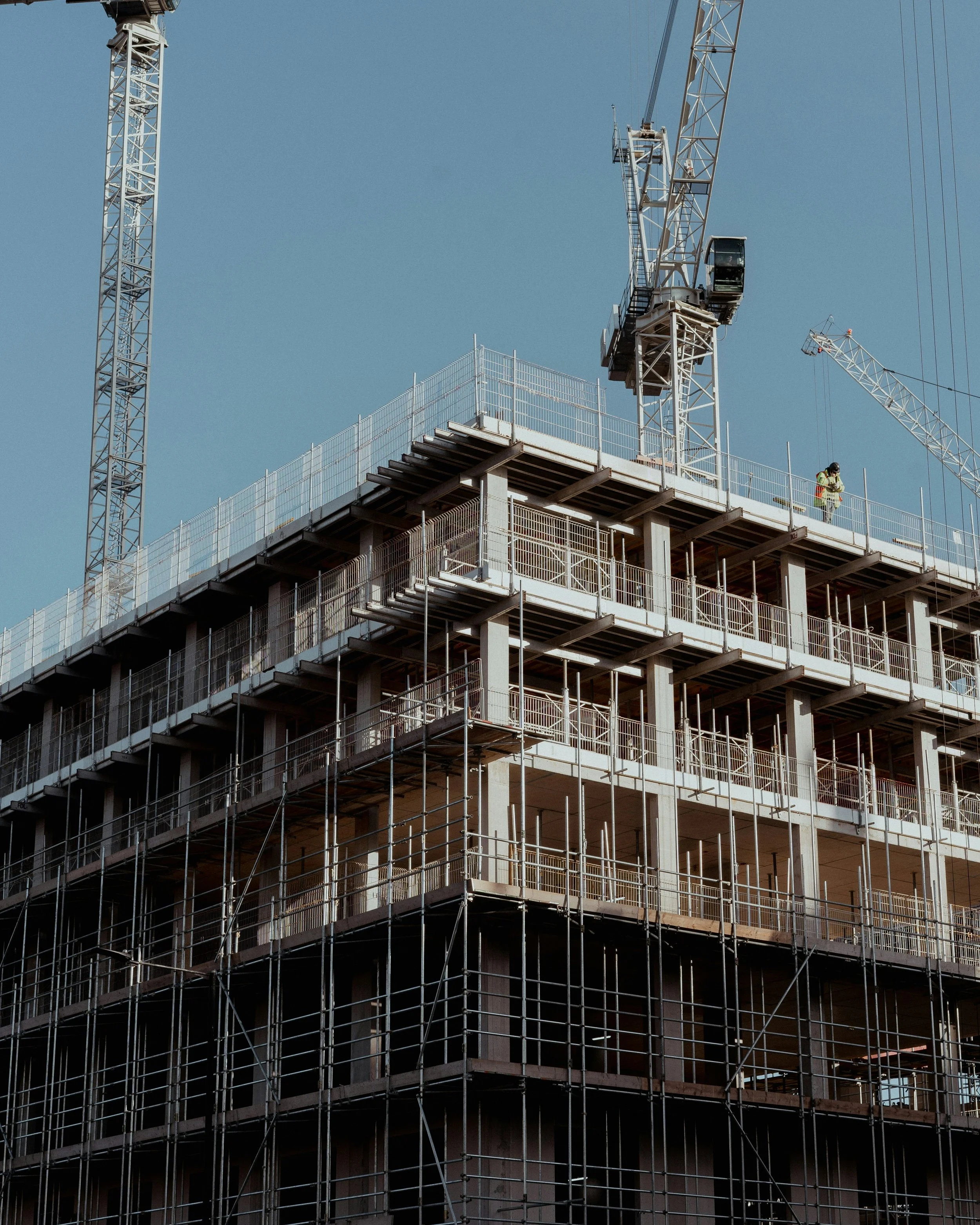
There's a lot of excitement around modular and prefabricated construction right now. You can see why. The country has a housing shortage. Labor is scarce and expensive. Post-wildfire communities in California need thousands of homes rebuilt as fast as possible. Modular construction promises to cut build times by 30 to 50 percent, reduce on-site labor, and deliver consistent quality from a factory floor. The market was worth $173 billion in 2025 and is growing at nearly 6 percent per year.
A lot of that excitement is justified. But from a structural engineering standpoint, the speed advantage of modular construction doesn't come for free. It comes with trade-offs that need to be understood and managed from the very beginning of a project. The connections between modules, the tolerances that govern how factory-built units fit together on site, and the way lateral loads get transferred through a multi-module structure are different enough from conventional construction that engineers who treat modular projects like standard site-built ones tend to find out the hard way that they aren't.
This post covers what modular and prefab construction actually is, what it takes structurally to make it work, where the real engineering challenges live, and what developers, contractors, and anyone building in a post-disaster or high-demand housing market needs to know before committing to an off-site approach.
1. What We Mean by Modular and Prefabricated
The terms modular and prefabricated get used interchangeably but they describe different things. Understanding the difference matters because the structural engineering implications are quite different.
Modular construction involves building three-dimensional volumetric units in a factory, typically complete with finishes, fixtures, and mechanical and electrical systems, then transporting them to the site and stacking or connecting them to form the finished building. Each module is essentially a complete room or section of a building. The connection between modules is where most of the structural engineering complexity lives.
Panelized prefabrication involves manufacturing flat components, wall panels, floor panels, and roof panels, in a factory and assembling them on site like a kit of parts. The components need to be assembled into a three-dimensional structure on the job site, which involves more on-site labor than volumetric modular but less than conventional framing. Structural panels with sheathing already applied can carry shear loads; structural insulated panels (SIPs) combine structure and insulation in a single prefabricated component.
Hybrid systems combine modular pods for repetitive elements, bathroom pods are the most common example, with conventional or panelized construction for the rest of the building. This approach is increasingly popular in multifamily and hospitality construction because it captures the quality control advantages of factory production for the components where that matters most, while maintaining design flexibility elsewhere.
All the Same Codes Apply
A modular building in California is still regulated by the California Building Code. A modular building in Texas follows the International Building Code as adopted by the state. The factory production environment doesn't create a code exemption. Modules typically go through a third-party inspection program, administered by the state or by an approved inspection agency, that certifies each module before it leaves the factory. But the structural engineering design has to meet the same requirements as site-built construction for the occupancy type, seismic design category, fire resistance rating, and every other applicable provision.
2. Where the Structural Engineering Gets Complicated
Structural engineers who work primarily on conventional construction usually hit one of three surprises when they start working on modular projects. The connections, the tolerances, and the lateral system design are all more involved than they look.
Module-to-module connections: the critical joint
In a multi-story modular building, the structural load from the floors above has to transfer through the connections between modules. Those connections also need to transfer the lateral forces from wind and seismic loading. Unlike a conventional building where a structural engineer can detail a connection to exactly the dimensions needed for the loads it carries, module-to-module connections have to work within the tolerances that the factory production process creates.
Factory production is more precise than site framing in most respects, but no module arrives at a job site exactly the theoretical dimensions that were modeled. Modules are slightly out of plumb, slightly out of square, slightly different in height from their neighbors. Good modular connection design accounts for that variability. It provides enough adjustability in the connection hardware to accommodate the real-world dimensional variation while still achieving the structural load transfer the design requires. When this isn't thought through carefully, you end up with connections that can't be made up properly on site, or that develop unexpected load paths that weren't in the structural model.
The IBC's structural requirements for connections in modular construction are the same as for site-built construction. The load path has to be complete and documented. In California under CBC 2025, the seismic detailing requirements apply fully, which means the connection design for a modular building in Seismic Design Category D needs to satisfy the same requirements as a conventional building in the same category. The factory-built origin of the structural elements doesn't relax any of that.
Tolerances and the stacking problem
In a single-story modular structure, dimensional tolerances are manageable. In a four-story or eight-story stacked modular building, small tolerances at each level compound. A module that's a quarter-inch out of plumb at level one creates a different compounded offset by the time you reach level four than the structural model assumed. The bearing conditions at upper-level module corners may not be what was designed if the accumulated tolerance stack wasn't accounted for in the connection system.
This is why experienced modular structural engineers specify connection systems that provide three-dimensional adjustability, vertical, horizontal, and rotational, within defined tolerance bands. The structural model needs to be able to accommodate the worst-case tolerance scenario and still show adequate load paths. Pre-installation surveys and real-time dimensional checks during erection are more important in modular construction than in conventional construction for exactly this reason.
Lateral systems: how do the modules work together?
This is the question that requires the most careful thought in multi-story modular structural design. In a conventional building, the lateral system, whether shear walls, moment frames, or a combination, is a continuous structural assembly that develops its capacity through the connections between its components. In a modular building, the lateral system is divided by the module boundaries. A shear wall in a modular building doesn't run continuously from foundation to roof the way it would in a conventional building. It passes through module joints, and those joints need to be detailed to transfer the shear and overturning forces that the wall needs to carry.
Some modular systems handle this by designing the individual modules to be structurally independent, with each module carrying its own gravity and lateral loads, and designing the inter-module connections to handle only the differential movement between modules. Other systems treat the assembled building as a monolithic structure and design the inter-module connections to achieve continuity across module boundaries. The first approach is simpler to design and build but can result in a less efficient structure; the second approach is more engineering-intensive but produces a building that performs more like a conventional structure under lateral loading.
30-50%
The typical reduction in total project schedule that modular construction delivers compared to conventional site-built methods. The structural design phase still takes as long, but site work and factory production run in parallel.
3. The Speed Advantage: Real, But Front-Loaded
The 30 to 50 percent schedule reduction that modular construction consistently delivers is real. But it's important to understand where that time saving comes from and what it requires from the design team to achieve it.
The key mechanism is parallelism. In conventional construction, the foundation has to be complete before framing starts, framing has to be substantially complete before mechanical and electrical work begins, and so on. In modular construction, the factory is building the modules at the same time as the foundation is being constructed on site. By the time the foundation is ready to receive modules, the modules are either complete or nearly so. The time saved is the overlap between what would otherwise be sequential phases.
But capturing that time saving requires the design to be completely finalized before factory production begins. In conventional construction, a structural engineer can accommodate a last-minute program change or an owner-directed field modification with a drawing revision. In modular construction, once a module goes into production, changes are expensive and sometimes impossible. The design freeze that modular requires typically happens earlier than developers and owners are accustomed to in conventional projects. Engineering teams that have managed this before know to set clear design freeze milestones and hold to them. Teams new to modular often discover the constraint at a moment when it causes delays rather than prevents them.
For Developers: What Modular Actually Costs
Modular construction typically runs 10 to 20 percent less in total project cost than conventional construction, though this varies significantly by project type, location, and the specific manufacturer involved. The savings come primarily from reduced on-site labor, shortened construction schedules (which reduce financing costs), and factory quality control that reduces post-construction warranty and defect issues. Studies of modular projects consistently show 70 to 85 percent fewer post-occupancy defect reports than comparable conventionally built structures. The trade-off is that the savings require earlier design commitment and less flexibility for changes once production begins.
4. Post-Wildfire Housing: Why Modular Makes Sense, and What to Watch For
After the 2023 Maui wildfires and the 2025 Los Angeles fires, modular construction got a lot of attention as a rapid housing recovery tool. The logic is straightforward: factory production can continue regardless of conditions on the affected site, modules can be transported and installed quickly, and the quality control of factory production reduces the risk of the construction defects that sometimes emerge in a rushed site-built rebuild.
All of that is true. But there are WUI-specific structural considerations that apply to modular construction in fire-prone zones just as much as they do to conventional site-built construction. A modular home in a Very High Fire Hazard Severity Zone still has to comply with Title 24, Part 7, California's WUI code. The exterior cladding, roofing, vent protection, and glazing all have to meet the WUI requirements regardless of whether the structure was built in a factory or on site.
There's also a foundation consideration that sometimes gets less attention than it deserves. The speed of modular delivery on a post-wildfire site can create pressure to use the existing foundation if one is present. Whether that foundation can actually support the modular structure requires the same assessment process described in our post on structural assessments and fire-damaged foundation evaluation. A burned foundation that looks intact from grade level may not be. The modular delivery schedule doesn't change the engineering requirement to assess the foundation properly before modules are placed on it.
5. What This Means for Developers, Contractors, and Homeowners
If you're a developer
Modular is most competitive on projects with significant repetition: multifamily housing, hotels, workforce housing, student housing, medical facilities. The more repetitive the floor plan and structural bay, the more the factory production advantages compound. Highly custom, non-repetitive projects rarely achieve the same cost and schedule benefits because the factory setup costs become a larger share of total cost when there are fewer identical modules to spread them across.
The single most important thing you can do early in a modular project is define your design freeze milestone and stick to it. More modular projects lose their schedule advantage to late program changes than to any structural or construction issue. Align your owner decision-making process to the modular timeline, not the other way around.
If you're a contractor
Site work and foundation construction need to be complete and ready to receive modules within a narrow window. The factory is producing modules on a schedule, and those modules will arrive on site whether the foundation is ready or not. Any delays in site readiness that push module installation back eliminate the parallelism that makes modular faster. Foundation tolerances also need to be tighter than in conventional construction because module placement requires the bearing surfaces to be level and positioned to within the tolerances the connection system was designed for.
If you're a homeowner
Factory-built housing has a different look and feel in the building process than conventional construction. There's typically less visible activity on your site for a long period while the modules are being built in the factory, followed by a compressed period of intense activity when the modules are installed and connected. The structure itself, once complete, should perform to the same structural and code standards as a conventionally built home. If you're in a seismic or WUI fire zone, the engineering requirements are the same regardless of how the home was constructed.
Conclusion
Modular and prefabricated construction delivers real advantages in speed, cost predictability, and quality control. The structural engineering required to make it work is different from conventional construction in specific ways, particularly around module-to-module connections, tolerance management, and lateral system design, but it's not more complicated overall. It's just different, and those differences require engineers and construction teams who understand them.
The housing demand that's driving modular construction growth isn't going away. Post-wildfire recovery, urban housing shortages, labor constraints, and the pressure to build faster and more cost-effectively are all structural forces pushing the industry toward off-site production. Engineers who develop the specific expertise that modular construction requires are positioning themselves for a sustained workload in a sector that's still figuring out its best practices.
