
Urban Heat Island Mitigation Through Landscape Engineering: Trees, Pavements, and Cooling Corridors
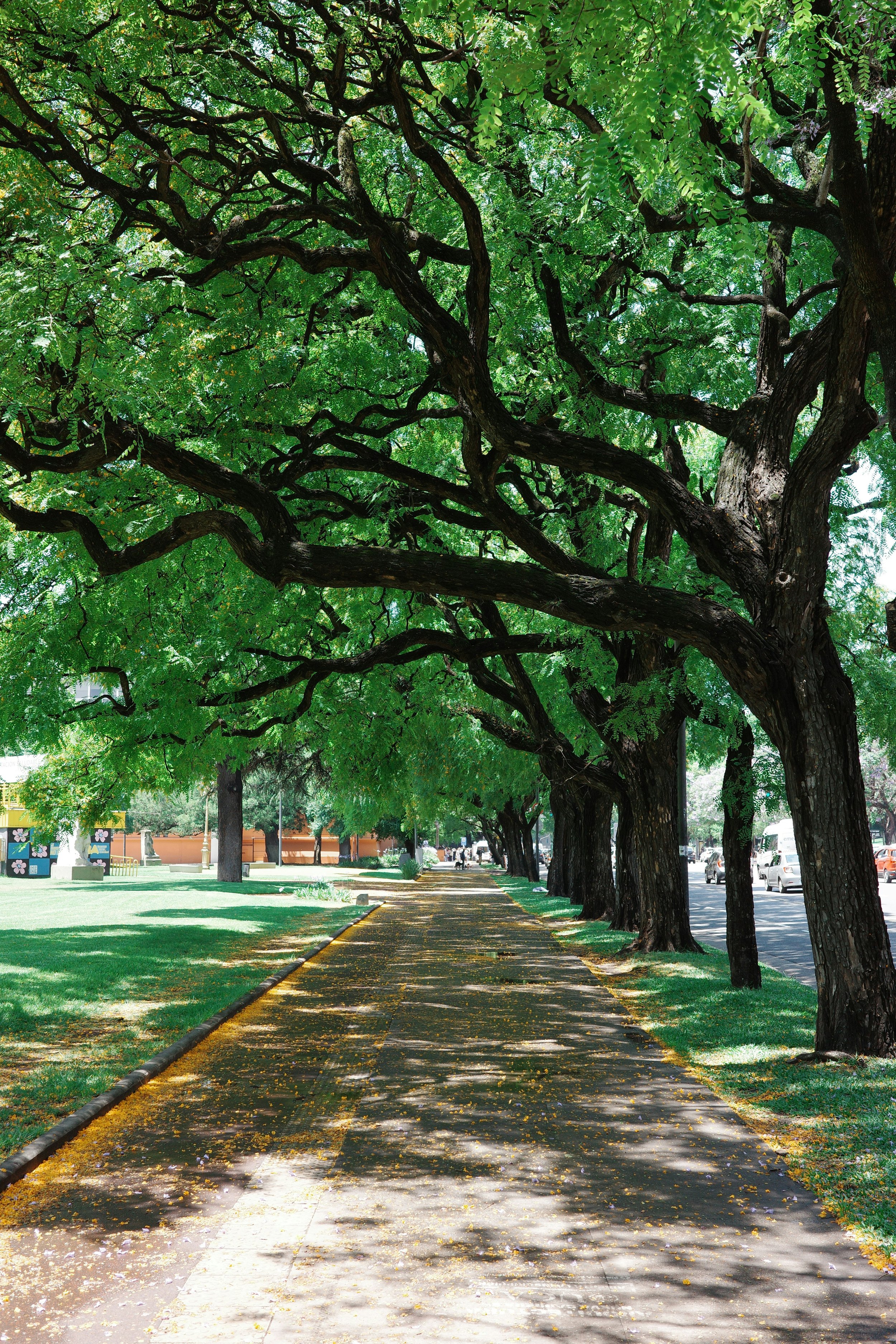
On a summer afternoon in most American cities, you can feel the heat difference between a sun-exposed concrete sidewalk and a shaded tree canopy in seconds. That temperature difference is real and significant. Research published by the World Resources Institute in April 2026 found that shade from trees can reduce how hot it feels in an urban environment by up to 14 degrees Celsius, which is 25 degrees Fahrenheit, compared to an unsheltered surface in direct sun. Street trees alone, if planted on all available urban street right-of-way, could increase urban canopy cover by nearly 4 percent and reduce felt temperatures by up to 6 degrees Celsius in the shade.
Urban heat islands, the phenomenon where developed areas are measurably warmer than surrounding rural areas due to heat-absorbing surfaces, reduced vegetation, and waste heat from human activity, are one of the most well-documented and consequential environmental impacts of urbanization. The difference ranges from 1 to 7 degrees Fahrenheit on average, but during heat events, the differential can be substantially larger. For cities already experiencing increasing frequency and intensity of extreme heat events under changing climate conditions, that urban heat premium has direct consequences for public health.
Landscape engineering is one of the most effective tools available to reduce that premium. Trees, ground cover, permeable surfaces, water features, and the spatial arrangement of green and cool elements through a city all affect urban temperature in ways that can be measured, modeled, and designed for. This post covers the mechanisms by which landscape elements reduce urban heat, the specific tools available, how to design at the scale where they're most effective, and what this means for property owners, developers, and communities.
1. How Urban Heat Islands Form
The physical mechanisms of urban heat island formation are straightforward. Conventional urban surfaces, asphalt, concrete, dark roofing materials, absorb solar radiation and re-emit it as heat. These materials have high thermal mass, meaning they store large amounts of heat during the day and release it slowly into the air through the evening and night. In rural areas, vegetation and soil absorb a portion of solar energy through evapotranspiration, the process by which plants release water vapor that cools the air as it evaporates. In a dense urban area with little vegetation and large expanses of heat-absorbing pavement and roofing, that cooling mechanism is largely absent.
The result is a city that heats faster, stays hotter, and cools more slowly than its surroundings. During a heat event, the urban heat island effect can mean that city residents experience temperatures 5 to 15 degrees Fahrenheit higher than people in nearby suburban or rural areas, with the difference most acute at night when rural areas have cooled but city surfaces are still releasing stored heat.
The heat island effect is also not evenly distributed within cities. Low-income neighborhoods, which historically received less public investment in street trees and parks, often have significantly less canopy cover and more impervious surface than wealthier neighborhoods. Urban canopy expansion is therefore both a climate adaptation issue and an equity issue: the people most exposed to extreme urban heat are often the least likely to have the tree cover and green space that would moderate it.
14°C
The maximum reduction in felt temperature that shade from trees can provide compared to unsheltered surfaces in direct sun, per World Resources Institute analysis published April 2026. Trees make cities livable during heat events in ways nothing else does.
2. Trees: The Most Effective Single Tool
Trees are the single most effective landscape engineering tool for urban heat mitigation, and they work through multiple mechanisms simultaneously. Shade prevents solar radiation from reaching and heating pavement, buildings, and people directly. Evapotranspiration cools the surrounding air as plants release water vapor. Canopy interception reduces the rate at which solar energy reaches urban surfaces. And roots and root zone soil provide infiltration that reduces impervious surface area and provides soil moisture that supports further evapotranspiration.
The cooling effect documented in research is substantial. New York City canopy evaluations in public housing show 2 to 3 degrees Celsius of ambient air temperature reduction from tree planting programs. Street trees in Los Angeles studies show pavement surface temperature reductions of several degrees. The combined use of trees with reflective or light-colored pavement amplifies the effect because both mechanisms are additive.
Street trees and cooling corridors
Street trees are particularly high-value because they're located on public land where a single municipality or utility can plan, install, and maintain a large canopy program without needing to coordinate with hundreds of individual property owners. They also create the cooling corridors that connect cooler parks and green spaces through the urban fabric: a tree-lined street functions as a temperature transition between a hot urban core and a cooler park or waterway.
The WRI April 2026 analysis of urban tree planting potential found that most cities are leaving substantial plantable land on streets underutilized. The gap between current and potential canopy cover on street right-of-way is often 3 to 5 percentage points, representing millions of trees that could be planted without requiring any private property changes. The barrier isn't space. It's maintenance funding, soil conditions that support tree establishment and long-term health, and the political will to prioritize canopy expansion consistently over time.
Tree species selection: what matters for urban heat
Not all trees provide equal cooling benefit. The characteristics that matter most for urban heat mitigation are canopy density (how much solar radiation the canopy intercepts), canopy spread (how much pavement area is shaded), evapotranspiration rate (how much cooling the tree provides through water vapor release), and drought tolerance (how well the tree maintains its leaf area and transpiration rate during dry periods). Urban trees that drop leaves or close stomata under drought stress lose much of their cooling value precisely during summer heat events when the cooling is most needed.
Large-canopy, drought-tolerant native species that are well-adapted to local soil and climate conditions consistently outperform the ornamental trees that dominate many urban street tree palettes. The street tree selection process is increasingly being informed by urban heat modeling tools that predict which species and spacing arrangements will produce the greatest heat mitigation benefit in specific urban contexts.
3. Cool Pavements: A Complement to Trees
Pavement covers a large share of urban surface area, particularly in parking lots, arterial streets, and commercial centers. Conventional dark asphalt can reach surface temperatures of 150 to 170 degrees Fahrenheit on summer afternoons. That heat radiates to people and vehicles nearby and contributes to the nighttime heat release that keeps cities warm long after sunset.
Cool pavements use higher-albedo materials or coatings that reflect more solar radiation and absorb less heat. Reflective coatings applied to existing asphalt surfaces can reduce pavement surface temperature by 10 to 15 degrees Fahrenheit. Light-colored concrete is inherently more reflective than dark asphalt and has been standard in some jurisdictions for years. Phase-change paints and advanced radiative cooling materials that emit heat as infrared radiation are emerging technologies that can cool surfaces below ambient air temperature without any active energy input.
Permeable pavement provides cooling benefit through a different mechanism: moisture retained in the subgrade base evaporates through the permeable surface, cooling the pavement through the same evapotranspiration process that makes trees effective. Studies in several cities show permeable pavement running 5 to 15 degrees Fahrenheit cooler than conventional impervious asphalt in comparable conditions.
The research consistently shows that trees and cool pavements together produce greater temperature reductions than either alone. A shaded parking lot with light-colored permeable pavement may run 20 to 30 degrees Fahrenheit cooler than a conventional dark asphalt lot in full sun. The synergy is meaningful enough that urban heat mitigation strategies that use only one tool leave significant potential cooling unrealized.
4. Water Features and Blue-Green Infrastructure
Water moderates urban temperatures through evaporative cooling. The cooling effect radiates from water bodies into surrounding areas. Research shows lakes and ponds running 10 to 50 percent cooler inside their boundaries than at their edges at distances of 30 to 200 meters. Rivers provide 5 to 15 percent cooling in adjacent areas. Urban wetlands show 5 to 20 percent cooling effects.
Blue-green infrastructure, the combination of water features and vegetated landscape elements, produces cooling effects that exceed what either could accomplish alone. A park that combines a water feature with tree canopy, vegetated ground cover, and permeable surfaces creates a microclimate that can be measurably cooler than either a tree-only or water-only park of similar size.
For developers, this means that thoughtful integration of water features, even modest ones like bioretention basins, rain gardens, and stormwater features that hold water seasonally, into site design provides temperature benefits that are particularly valuable during heat events. A commercial site with a landscaped stormwater bioretention area that holds water for days after a rain event is a site that's cooler during the next heat event than a comparable site that drains its stormwater immediately.
5. Designing at the Right Scale
The most important principle in urban heat island mitigation through landscape engineering is scale. Individual trees, individual green roofs, and individual permeable parking lots all provide local benefits. But the city-scale temperature reduction that dramatically improves public health outcomes during heat events requires coordinated intervention at the district and city scale.
Green corridors, defined routes through the city where tree cover, vegetation, and permeable surfaces are concentrated, create pathways for cooler air to penetrate from parks and waterways into the built fabric. Street tree planting programs that prioritize east-west streets in hot climates, where the canopy provides morning and afternoon shading for people traveling in those directions, are more effective than random plantings. Parking lot canopy requirements that mandate a minimum tree cover percentage convert the large heat-absorbing surfaces of commercial parking areas into shaded, cooler environments.
For local governments: urban heat mapping using thermal infrared satellite imagery and ground-based temperature monitoring is increasingly accessible and affordable. Identifying the hottest neighborhoods, understanding the relationship between canopy cover and temperature in those neighborhoods, and targeting tree planting and surface cooling investments where they'll produce the greatest health benefit is more effective than treating the whole city uniformly.
For Developers: The Business Case for Shade
Shaded parking lots are more comfortable for customers and employees during summer. Commercial properties with mature tree canopy typically command higher rents and sale prices than comparable properties without it. Green spaces and tree-lined corridors are among the most consistently cited factors in residential neighborhood desirability surveys. The landscape investments that reduce urban heat on your site also make it a more pleasant and marketable place. The cooling benefit is the result; the business case is the reason to prioritize it.
Conclusion
Urban heat is a landscape engineering problem with landscape engineering solutions. Trees are the most powerful tool, the cooling they provide through shade and evapotranspiration is immediate, durable, and multifaceted. Cool and permeable pavements amplify the benefit by reducing the heat absorbed by the large impervious surfaces that dominate urban areas. Water features add evaporative cooling. And the spatial arrangement of these elements into corridors and networks that connect cooler spaces through the urban fabric is what scales individual interventions into city-level temperature reduction.
The data on cooling potential is compelling. The tools are available and increasingly affordable. The health case for urban heat island mitigation, cities that stay cooler during heat events see measurably fewer heat-related hospitalizations and deaths, is one of the most robust cost-benefit arguments in public infrastructure.
What remains is the will to prioritize canopy expansion, cool surface programs, and green space investment consistently enough to make the cumulative difference visible in temperature data. That's a political and budgetary question more than a technical one. The engineering of how to do it is well understood.
