
Rebuilding After Wildfire: Structural Assessments and Fire-Damaged Foundation Evaluation
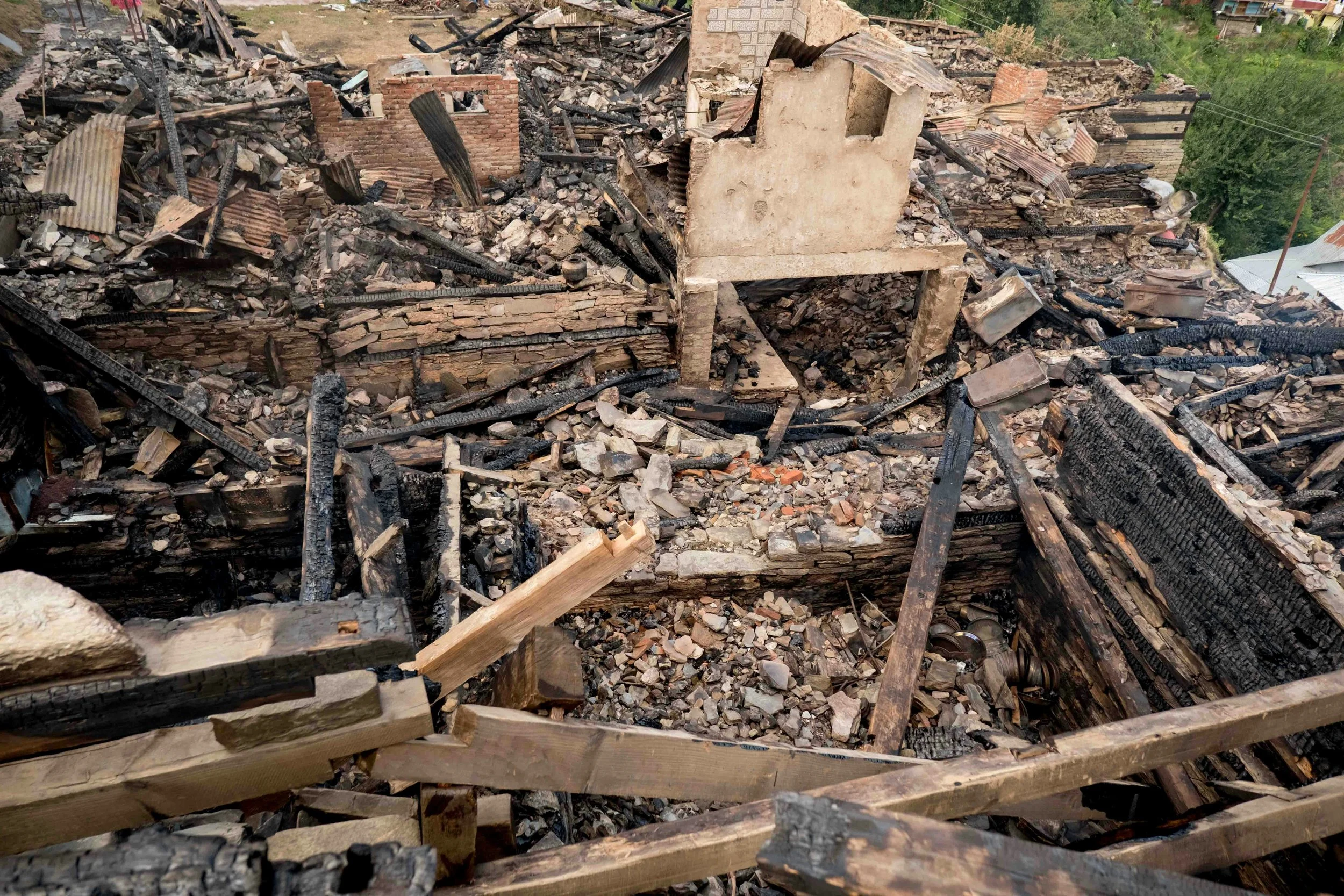
When the flames are out and the smoke clears, most people look at a burned building site and see destruction. A structural engineer looks at it and sees a set of questions that have to be answered before a single new wall goes up. Was the foundation exposed to enough heat to compromise its strength? Are the anchor bolts still serviceable? Is there rebar in those concrete walls that's been weakened beyond what any repair can address? Can this foundation be reused, or does it need to come out?
The 2025 Los Angeles wildfires destroyed more than 16,000 structures across the Palisades, Altadena, and surrounding communities. That scale of loss generates an enormous demand for structural assessments, and it also generates enormous pressure to move fast. Homeowners want to rebuild. Contractors are standing by. Insurance adjusters are working through stacks of claims. In that environment, shortcuts happen. Foundations that look intact get approved based on a surface scan. Concrete that's pink from iron oxide changes, a direct indicator of temperature exposure above 300 degrees Celsius, gets missed because someone didn't know what they were looking at.
The engineering community's response has been serious. Following the January 2025 fires, SEAOC (Structural Engineers Association of California) released its Recommended Investigation and Design Guidelines for Foundations Exposed to Fire, the first formal guidance specifically addressing post-wildfire foundation assessment methodology. NCSEA and SEAOC convened a wildfire mitigation educational series that brought leading structural fire engineers together around case study evidence from the Eaton and Palisades fires. The profession is developing the tools. What every structural engineer working in post-wildfire environments needs to understand is how to use them.
This post covers what fire actually does to concrete, steel, and foundation systems; the assessment methodology from preliminary screening through detailed investigation; the color indicators and testing methods that tell you what temperature a structure experienced; the decision framework for reuse, repair, or replacement; and the permit and code requirements governing rebuild in Los Angeles and under the 2025 California Building Code.
1. What Fire Does to Structural Materials: The Physics Behind the Assessment
Structural assessment after a wildfire isn't intuitive work. The damage isn't always visible, and what's visible doesn't always predict what's structurally significant. Understanding the temperature-dependent behavior of concrete, steel, and masonry is the foundation of a credible assessment.
Concrete under heat
Concrete is generally considered a good fire-resistant material. Its low thermal conductivity means heat penetrates slowly from the surface inward, and the mass of a concrete foundation protects interior concrete and embedded rebar for a significant period. Below 120 degrees Celsius, the concrete loses free moisture but its structural properties aren't significantly affected. Below 300 degrees Celsius, there's no meaningful change in color and no significant loss of compressive strength.
The transition zone that matters for foundation assessment begins around 300 degrees Celsius. Above that temperature, two important things happen. First, the concrete begins to change color from its normal gray toward pink or red, caused by iron oxide changes in the aggregate. That color change is a direct physical indicator of heat exposure, and it persists after the concrete cools. Second, compressive strength begins to decline. By 500 degrees Celsius, concrete has lost a meaningful fraction of its original compressive strength. At 600 to 900 degrees Celsius, the color shifts to whitish gray. Above 900 degrees Celsius, it moves toward a buff-yellow. Each color band corresponds to a temperature range and, by extension, to a level of structural degradation.
Spalling is another indicator. When concrete heats rapidly, pore water converts to steam and the internal vapor pressure can fracture the cover concrete from the surface outward. Firefighting hose streams can cause similar spalling through sudden thermal shock when cold water hits hot concrete. Not all spalling is structurally critical, but spalling that exposes rebar, or that penetrates deeply into load-bearing sections, is a serious finding that requires follow-up investigation.
Rebar and embedded steel
The rebar embedded in a concrete foundation is generally protected by the concrete cover. As long as the cover is intact and the concrete hasn't been heated beyond the threshold where strength loss becomes severe, embedded rebar typically retains most of its original yield strength after the structure cools. Research consistently shows that rebar regains most of its strength on cooling, provided it wasn't exposed to direct fire at temperatures that caused significant plastic deformation.
The concern with rebar shifts when the concrete cover spalls. Exposed rebar that reached temperatures above 400 degrees Celsius can experience measurable reduction in yield strength. At or above 600 degrees Celsius, the reduction becomes severe enough to be structurally significant. In foundation systems, the most vulnerable elements are anchor bolts and hold-down hardware connecting the superstructure to the foundation. The Thornton Tomasetti Eaton Fire case study, published in early 2026, documented that stem walls from the Eaton Fire community showed anchor bolts that were bent or corroded, with spalling, fractures, and cracking frequently originating at and near anchor bolt and hold-down locations. Those connection points are the highest-priority targets in any foundation visual survey.
Steel superstructure members
Steel has higher thermal conductivity than concrete, making unprotected steel more vulnerable to rapid heat exposure. Wildfire temperatures can reach well above the thresholds at which structural steel begins to lose strength significantly, generally above 400 to 500 degrees Celsius. Signs of fire damage in steel members include warping, buckling, and twisting. Assessment of these deformations is critical because they indicate which members need replacement rather than repair. Steel superstructure members that have undergone visible distortion should be presumed inadequate until proven otherwise by a qualified structural engineer.
The Hidden Danger: Foundations That Look Fine
The most dangerous misconception in post-wildfire assessment is that a foundation is acceptable if it looks acceptable from above. A foundation slab or stem wall can appear visually intact from the main floor level while concealing heat-induced cracking, compromised concrete, and bent or corroded anchor hardware just inches below the surface. SEAOC's post-LA-fire guidelines emphasize that a post-fire structural assessment is nonnegotiable even when a structure appears outwardly intact. What you see from grade is not sufficient grounds for a reuse decision.
2. The Color Temperature Chart: Reading What the Concrete Tells You
Concrete color after fire exposure is one of the most practical and immediately accessible indicators available to a structural engineer in the field. It doesn't require equipment, it's visible in the existing concrete surfaces, and it correlates directly to temperature history. Every engineer doing post-wildfire foundation work should have this color temperature map internalized.
| Concrete Colour | Approximate Temperature Range | Compressive Strength Impact | Assessment Significance |
|---|---|---|---|
| Normal gray | Below 300°C (572°F) | No significant change | Concrete properties largely unaffected; assess for mechanical damage from thermal shock or firefighting water |
| Pink to red discoloration | 300 to 600°C (572 to 1,112°F) | Strength reduction begins; significant above 500°C | Critical indicator of heat exposure; iron oxide changes drive discoloration; coincides with onset of meaningful strength loss |
| Whitish gray | 600 to 900°C (1,112 to 1,652°F) | Severe strength reduction; 50%+ loss possible | Serious structural concern; calcium hydroxide decomposition underway; rebar cover likely inadequate; coring required |
| Buff to yellow | Above 900 to 1,000°C (1,652 to 1,832°F) | Extreme degradation; concrete essentially destroyed | Foundation likely unrepairable; replacement typically required; carbonate aggregate decomposition produces lime |
Two important cautions apply to color-based assessment. First, the color indicators described above apply to siliceous aggregate concrete, which is the most common type in residential construction. Carbonate aggregate concrete behaves differently: it can produce a buff or whitish color at lower temperatures because carbonate decomposition proceeds differently. Second, color assessment tells you about surface and near-surface temperature history. The thermal gradient through a concrete wall means that the interior of a thick section may not have reached the same temperature as the surface. Core sampling is needed to determine how deep the thermal damage penetrated.
3. The Assessment Methodology: From Preliminary Screening to Detailed Investigation
Post-wildfire structural assessment isn't a single inspection event. It's a phased process that moves from a rapid preliminary screening to a detailed investigation calibrated to the findings of that first phase. Understanding the sequence, and what each phase is designed to determine, is important for both engineers conducting assessments and for homeowners and insurers trying to understand what they're paying for.
Phase 1: Preliminary visual and non-destructive screening
The preliminary investigation's goal is to quickly sort foundations and structural elements into three categories: clearly undamaged, suspect and requiring detailed investigation, and clearly compromised. This phase can be conducted with relatively minimal equipment by an experienced structural engineer.
A systematic visual survey documents color changes, spalling locations and depth, cracking patterns, exposed rebar, and any deformation or displacement of the foundation system. Anchor bolts, hold-downs, and hardware connections receive specific attention because they're both high-visibility in a burned structure and among the most structurally critical elements in a residential foundation system. Leaning or tilting stem walls are documented as possible indicators of fire damage or loss of lateral support from the burned superstructure above.
Hammer sounding is conducted across concrete surfaces to identify delaminated or deteriorated areas. Sound concrete gives a sharp, ringing response. Damaged or delaminated concrete gives a dull thud. A framing hammer works for this purpose: experienced engineers in post-wildfire work from Colorado's Waldo Canyon and Black Forest fires documented that areas of severely damaged concrete could be fractured to expose rebar with just two to six hammer strikes, which convinced homeowners inclined to preserve questionable foundations that replacement was the right choice.
The Schmidt rebound hammer (also called a sclerometer or Swiss hammer) is a standard preliminary non-destructive test tool that measures surface hardness and can provide an approximate relative estimate of compressive strength. Fire-damaged concrete typically shows a 20 to 40 percent drop in rebound number. Because the as-built design compressive strength is often unknown for older residential foundations, the rebound hammer's greatest value in post-wildfire assessment is comparative: test results from heat-exposed areas can be compared against results from protected areas (areas below grade or under soil cover that weren't exposed to fire) to quantify the relative degradation. Multiple tests across at least four comparison areas are needed to produce meaningful results.
Phase 2: Detailed investigation with destructive and laboratory testing
When Phase 1 identifies suspect areas, or when a foundation is being considered for reuse rather than replacement, a detailed investigation is warranted. This phase typically involves some combination of the following:
• Concrete coring: Cylindrical cores, typically 4-inch diameter, are drilled through foundation walls, stem walls, and slabs to extract samples for laboratory testing and visual examination. The color transition visible in a core cross-section reveals how deep the thermal damage penetrated. Laboratory testing of cores provides direct compressive strength data. SEAOC's 2025 guidelines emphasize that targeted excavation guided by heat transfer analysis can improve assessment efficiency by directing coring to the locations most likely to be damaged.
• Ultrasonic Pulse Velocity (UPV) testing: Sound waves transmitted through concrete sections measure density and detect internal flaws. Lower pulse velocities indicate damaged or less dense concrete. UPV testing has limitations in fire damage assessment because the relationship between pulse velocity and strength is not fundamental, but it's useful for comparing sound and damaged zones and for identifying internal distress that isn't visible at the surface.
• Reinforcement sampling and testing: In cases where rebar was exposed to direct heat and visible deformation is present, or where the assessment indicates temperatures were reached that could affect yield strength, extracting rebar samples for tensile testing in a laboratory provides direct evidence of residual capacity.
• Petrographic examination: Thin sections of concrete cores examined under a microscope reveal the thermal history of the concrete at a microstructural level, including aggregate changes, calcium hydroxide decomposition, and other chemical transformations that indicate the temperatures experienced. Differential Thermal Analysis (DTA) and X-ray Diffraction (XRD) are laboratory methods that can quantify these changes with precision.
• Ground Penetrating Radar (GPR): GPR provides a non-invasive tool for mapping internal damage, detecting voids, cracks, and density changes to depths of 18 inches or more. It's particularly useful for identifying areas where rebar or post-tensioning have been compromised beneath slab surfaces that appear intact.
The SEAOC 2025 Guidelines: What Changed After the LA Fires
SEAOC released its Recommended Investigation and Design Guidelines for Foundations Exposed to Fire following the January 2025 wildfires, the first document of its kind specifically addressing post-wildfire foundation assessment in California. The guidelines cover both investigation criteria and design criteria for foundations exposed to fire, including methodology for visual inspections, non-destructive testing, material sampling, and heat transfer analysis to support shallow and deep concrete foundation evaluations. The SEAOC guidelines reflect lessons from the SEAOSC field reconnaissance teams that deployed immediately after the fires to collect perishable data, and they represent the current state of professional practice for California post-wildfire structural work.
4. Making the Call: Reuse, Repair, or Replace
Every post-wildfire foundation assessment ultimately produces a three-way decision: the foundation can be reused as-is, it can be reused after repairs, or it needs to be demolished and replaced. That decision carries significant financial and schedule consequences for homeowners, and it needs to be grounded in engineering evidence rather than assumptions or economic pressure.
When reuse is appropriate
A foundation may be approved for reuse when investigation confirms that the concrete retains adequate compressive strength and has not been subjected to temperatures that caused structural degradation of the rebar, that anchor bolts and hold-downs are intact and have not been deformed or corroded beyond acceptable tolerances, that cracks are limited and don't penetrate to the rebar level or indicate loss of structural continuity, and that the foundation geometry and bearing conditions haven't been altered by fire or firefighting activity.
Under LA County's rebuild guidelines and LADBS's Pacific Palisades Information Bulletin, reusing an existing slab and foundation is explicitly permitted, provided a California-licensed Professional Structural Engineer or Architect evaluates the foundation system and affirms that it is in satisfactory condition. That evaluation must include documentation, potentially including observations and test results, submitted to LADBS for review and approval. Projects in Palisades Geohazard Risk Assessment Zones may require additional soil or geotechnical investigation before foundation reuse is approved.
When repair is appropriate
Repair is appropriate when damage is localized and the foundation system as a whole retains structural integrity. Typical repair scenarios include spalled surface concrete that hasn't compromised rebar cover or section capacity, isolated cracking that can be addressed with epoxy injection or patching, and anchor bolt damage at specific locations that can be addressed with replacement hardware rather than wholesale foundation replacement.
Cast-in-place repairs and shotcrete are the standard methods for concrete section replacement where damage has removed material from foundation walls or slabs. Epoxy injection is appropriate for structural cracks. Anchor bolt replacement typically involves drilling new anchor locations adjacent to damaged hardware. Any repair design needs to account for the as-built foundation configuration, the superstructure loads that will be placed on the repaired foundation, and the seismic demands of the site, because California rebuilds in wildfire areas are subject to current CBC seismic design requirements.
When replacement is required
Replacement is typically required when widespread pink to whitish-gray discoloration indicates significant heat exposure across most of the foundation, when hammer testing reveals that large sections of concrete can be broken apart with minimal force, when core compressive strength is below the threshold needed to support the design loads, when anchor bolt and hold-down damage is widespread rather than isolated, or when the foundation type itself is inadequate for current code requirements in a way that repair can't address.
Engineers who evaluated foundations after the Waldo Canyon and Black Forest fires in Colorado, which provided some of the earliest systematic post-wildfire foundation assessment experience in the U.S., found a consistent pattern: where structures burned without being quickly extinguished, the sustained exposure to high heat was ultimately deleterious to the concrete and masonry, requiring complete foundation replacement. In wildfire scenarios as opposed to ordinary structure fires, the fire burns for extended periods without suppression, and the resulting thermal exposure is often beyond what any repair strategy can address adequately.
5. The Code Framework: CBC 2025, IBC, and LA Wildfire Rebuild Requirements
The regulatory environment for post-wildfire rebuilding in Los Angeles is layered and still evolving. Engineers working on rebuild projects need to understand which codes apply, what expedited processes are available, and what documentation is required at each stage.
Applicable codes
California adopted the 2025 California Building Code (CBC 2025), based on the International Building Code 2024 (IBC 2024), with state amendments. All new construction, repair work, and remodeling must meet current CBC requirements. Buildings constructed in compliance with the 2019 CBC don't require additional plan review if rebuilt to the same specifications under state recovery provisions, though local enforcement agencies retain discretion on further review requirements. The 2022 CBC evaluation standards remain applicable where relevant.
For structural design, IBC 2024 and CBC 2025 reference ASCE 7-22 for minimum design loads, including seismic requirements. California's high seismic hazard means that rebuild projects must satisfy the seismic design requirements of the applicable CBC edition. Where a homeowner is reusing a foundation approved by structural engineering evaluation, the structural design of the new superstructure must be designed to work with that foundation system and must satisfy current seismic demands. This is a design integration requirement that needs explicit attention when the foundation predates current seismic code and is being approved for reuse: the new superstructure may need to be designed to reduce demands on an older foundation that couldn't support full current design forces.
LA County and City of Los Angeles expedited processes
LA County and the City of Los Angeles both established expedited rebuild programs following the January 2025 wildfires. Governor Newsom's Executive Order N-4-25 suspended CEQA and Coastal Act requirements for projects repairing or rebuilding structures substantially damaged by the named fires. Mayor Bass's Emergency Executive Order No. 1 established dedicated permitting centers in burn areas and streamlined approval processes.
Under LADBS's Pacific Palisades Information Bulletin and related guidance, like-for-like replacement structures (same size, same location, same use, not more than 10 percent increase in footprint) receive expedited plan check processing. Plans must be submitted through the EPIC-LA online portal. The Wildfire Rebuild Plan Submittal Checklist requires complete structural calculations for vertical and lateral loads, signed by a California-licensed Structural or Civil Engineer, along with soil and geology reports with department approval letters dated within 10 years.
The structural engineer's role in the permit process
For any rebuild project where the existing foundation is proposed for reuse, the California-licensed Professional Structural Engineer's letter affirming the foundation's satisfactory condition is a prerequisite for permit approval. That letter needs to be grounded in the assessment methodology described above: visual inspection, appropriate non-destructive testing, and documentation sufficient to support the engineering judgment. A letter based on a superficial walk-through without documented testing is both professionally inadequate and creates liability exposure if the foundation subsequently performs poorly.
Complete structural calculations must accompany the permit application, addressing both gravity loads and lateral seismic demands under current code. For projects in PGRAZ (Palisades Geohazard Risk Assessment Zones), additional geotechnical requirements apply, and the engineer of record should confirm which zone the project site falls in before proceeding with foundation evaluation and design.
6. Rebuilding as an Upgrade Opportunity
Post-wildfire reconstruction in Southern California isn't just about replacing what was lost. It's about doing it better. The most strategically valuable approach is to address fire-resistance and seismic resilience together, because the work is overlapping and the combined cost is substantially lower than tackling them separately.
SEAOC and ASCE have both emphasized that when structural connections are opened up for seismic upgrades, the same work window addresses fire resistance at the connection level. Installing upgraded anchor bolts and hold-downs that meet current seismic requirements simultaneously addresses the connection elements most vulnerable to fire damage. Designing new concrete elements to current compressive strength standards with adequate cover depth for the seismic zone means the foundation is more fire-resistant as a direct consequence of meeting current code.
The material selection decisions that go into a rebuild also matter. Noncombustible framing materials, concrete, steel, and steel stud framing, eliminate the vulnerability of wood-frame construction that contributed heavily to the scale of destruction in both the 2018 Camp Fire and the 2025 LA fires. Where a wood-frame structure is being rebuilt, fire-resistant construction methods including ignition-resistant siding, multi-pane tempered glass, and enclosed eave assemblies meaningfully reduce re-ignition risk from ember exposure.
The cost of upgrading is real. But the cost of rebuilding to the same standards that failed, in the same locations at risk from the same hazards, is also real. It just gets paid differently, in the next fire event rather than in the current construction budget. Structural engineers advising homeowners and developers on rebuilds have both a professional and a practical obligation to make that case clearly.
For Homeowners: What to Ask Your Structural Engineer
A credible post-fire foundation assessment should include a documented visual survey with photographs of all damage observations; hammer sounding results; Schmidt hammer test results with comparison data from protected areas of the same foundation; a clear written statement of which areas were inspected and what methods were used; and a professional engineering judgment, stamped and signed, on whether the foundation is suitable for reuse, requires repair, or requires replacement. If a foundation assessment consists only of a brief site visit and a letter saying the foundation looks okay, you should ask for more.
Conclusion: The Assessment Comes First
More than 16,000 structures were destroyed in the 2025 LA wildfires. Every one of those sites where a homeowner or developer wants to rebuild starts with the same question: what do we actually have to work with? Can the foundation stay, or does it go?
That question can't be answered by standing at grade and looking at a concrete slab. It requires an engineer who understands what fire does to concrete at specific temperatures, who knows what color changes indicate about thermal history, who can interpret hammer sounding and rebound hammer results correctly, and who knows when to stop with surface evaluation and start drilling cores. It requires documentation adequate to support both the engineering judgment and the permit application. And it requires the professional integrity to tell a homeowner that a foundation needs to come out even when they're hoping it doesn't.
The profession has the tools. SEAOC has published the guidelines. The assessment methodology is well established from post-fire experience going back through Colorado, Northern California, and now LA. What it takes is structural engineers who deploy that methodology carefully and consistently, regardless of the economic and schedule pressure pushing toward faster decisions.
The rebuild starts with the assessment. And the assessment starts with getting it right.
