
Mass Transit Engineering: The Civil Infrastructure Behind America's Rail and BRT Renaissance
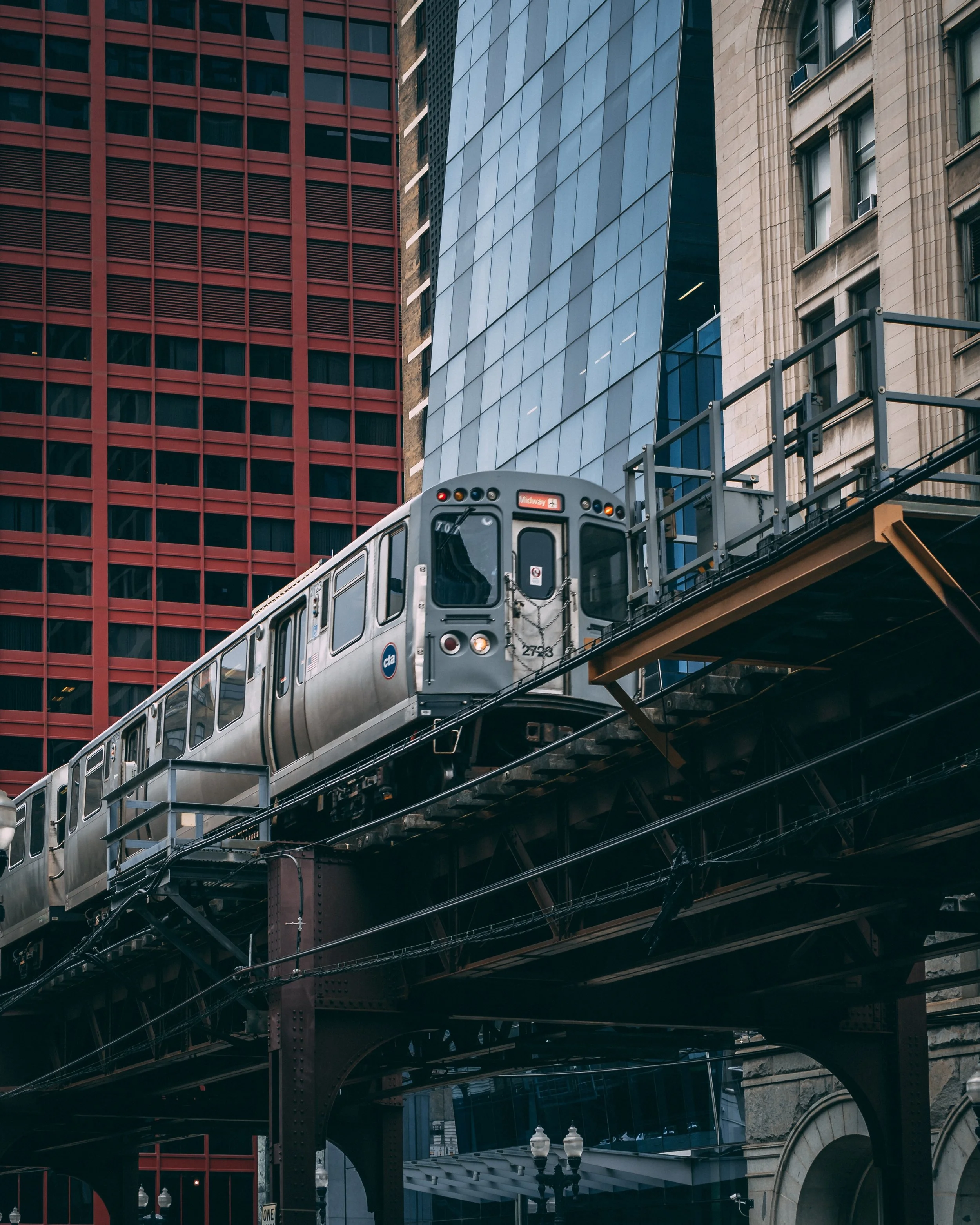
More than 160 miles of new rail, bus rapid transit, and other fixed-guideway transit lines opened in the United States in 2025. In 2026, another 94 miles are projected to open. Cities from Atlanta to Las Vegas to Seattle are cutting ribbons on transit systems that didn't exist five years ago. By any measure, this is a significant period of transit investment and construction in the country.
What's less visible in those headline numbers is the civil engineering that makes any of it possible. A bus rapid transit corridor isn't just a bus in a special lane. It's a redesigned street with new drainage infrastructure, signal systems, utility relocations, station structures, ADA-compliant boarding areas, and integrated bike and pedestrian connections. A light rail extension isn't just tracks. It's track bed preparation, utility avoidance and relocation, overhead power supply infrastructure, station buildings, grade crossing signals, and connections to the existing street network that have to be engineered precisely to keep trains and vehicle traffic moving safely in the same corridor.
This post covers what the civil engineering of mass transit actually involves, what the current BRT versus light rail trend means for construction practice, and what the most active transit expansion projects in the country in 2026 look like from an engineering standpoint.
1. The BRT Trend: Why Cities Are Choosing Buses Over Rails
The data from transit openings in the past two years is clear: the United States is building more bus rapid transit and fewer light rail extensions than it did a decade ago. In 2016, roughly 240 miles of new transit opened in the U.S., Canada, and Mexico combined, with rail projects making up a substantial share. In 2026, the combined North American total is around 150 miles, with a growing share of that going to BRT and arterial rapid transit.
The shift is primarily economic. Light rail construction costs in the U.S. have escalated dramatically. A mile of new light rail in an urban environment now frequently costs $100 million to $250 million or more, depending on how much underground work is required, how many grade separations the route crosses, and how many utilities need to be relocated. A comparable mile of BRT in a dedicated lane can be built for $5 million to $30 million. Cities with constrained budgets are doing the math and choosing BRT.
The other factor is speed to service. A BRT project from environmental review to ribbon cutting can often be completed in three to five years. A comparable light rail project routinely takes eight to twelve years. For cities trying to address transit access gaps now, not in a decade, the BRT timeline is compelling. Seattle's Sound Transit is the notable exception, actively building two light rail extensions projected to open in 2026 and 2027, having made the long-term capital commitment years earlier and moved through the process with unusual consistency.
160+ miles
Of new rail, bus rapid transit, and fixed-guideway transit that opened in the U.S. in 2025, followed by 94 projected miles in 2026. The trend is toward BRT, which typically costs 5 to 10 times less per mile than new light rail.
2. What BRT Civil Engineering Actually Involves
BRT is a good illustration of why transit expansion isn't a simple construction problem. The civil engineering scope for a quality BRT project is extensive and touches almost every utility and infrastructure system in the corridor.
Dedicated lane construction
The defining characteristic of true BRT is that buses run in lanes physically or operationally separated from mixed traffic. In most U.S. BRT projects, this means converting existing general traffic lanes to bus-only lanes, which sounds straightforward but requires rebuilding lane markings, installing physical separation barriers or colored pavement, redesigning intersections at each cross-street, and coordinating with the dozens of businesses and property owners who depend on the reconfigured corridor for deliveries and access.
The Hamilton Avenue BRT project in Cincinnati, a $143.6 million, 11-mile corridor connecting downtown to northern neighborhoods, is one of the larger BRT investments currently in construction. It includes dedicated bus lanes, enhanced stations with real-time arrival information, and transit-priority signal systems that hold green lights longer for approaching buses. Each of those elements has a civil engineering component: the lane construction, the station utility connections, the traffic signal infrastructure and detection systems, and the ADA-compliant pedestrian connections from surrounding sidewalks to the platforms.
Station structures and passenger experience
BRT stations are more substantial than a bus stop sign, but less substantial than a rail station. A quality BRT station has an enclosed or covered waiting area, real-time information displays, off-board fare payment equipment, ADA-compliant boarding at level with the bus floor (which requires the platform to be built at the same height as the bus floor, not the sidewalk), and lighting and security systems. Each station needs electrical service, data connectivity for the information systems, and a foundation appropriate for the local soil conditions.
The civil engineering challenge is that BRT station sites are usually in existing urban streets or corridors where underground utilities are dense and partially unmapped. Finding locations for station foundations that don't conflict with existing water mains, gas lines, electrical conduit, and telecom infrastructure requires utility coordination and often SUE investigation before design can be finalized. On projects like the Las Vegas BRT connecting the Medical District to Reid Airport, where the $378 million project also includes improved sidewalks, lighting, crosswalks, and landscaping, the civil scope is genuinely a street reconstruction project that happens to include transit as the primary purpose.
Utility relocation: the largest cost driver in urban corridors
On many urban BRT and light rail projects, utility relocation is the single largest cost driver after land acquisition. A typical mid-century urban arterial has water mains, sewer mains, gas lines, electric distribution conduits, telecom ducts, and fiber optic cables running in a complex layered arrangement below the pavement. A transit project that needs to rebuild the street surface, or install underground station structures, or run track beds for rail, frequently needs to move some or all of those utilities before construction can proceed.
Utility relocation costs on a single block can reach hundreds of thousands of dollars. Across a 5 to 10-mile transit corridor, the aggregate utility relocation budget can easily reach $20 to $50 million. These costs are project-specific and highly sensitive to the density and age of existing infrastructure, which is why early utility investigations using the SUE quality level methodology are standard practice on serious transit projects. Discovering a major utility conflict during construction, rather than during design, is one of the most reliable ways to blow a transit project's schedule and budget simultaneously.
3. Light Rail Civil Engineering: What Makes It More Complex
Light rail projects that are still being built, like Seattle's extensions and Los Angeles's D Line Purple extension, represent a different scale of civil engineering investment than BRT. The basic difference is that light rail is permanent fixed infrastructure. Once a track is in the ground, the route is committed. That permanence requires a higher engineering standard for every component.
Track and track bed
Light rail tracks require a prepared subgrade that can carry the dynamic loads of a moving rail vehicle without settlement or lateral movement. In urban environments, this often means rebuilding the street section completely, including the drainage infrastructure beneath it, before track can be placed. At-grade track in a shared street corridor has to be designed for rail vehicle loads while also handling adjacent vehicle traffic, pedestrian crossings, and the thermal expansion of the rails themselves. Special trackwork at switches and crossovers is some of the most precision-engineering-intensive civil work in urban construction.
Overhead power supply
Unlike BRT buses, which can run on battery power or hydrogen and don't need any permanent power infrastructure in the road, light rail vehicles draw power from an overhead wire called a catenary. Installing the catenary requires concrete poles at regular intervals, overhead wire tensioning systems, and electrical infrastructure that connects back to the traction power substations placed every mile or so along the route. All of that has to be engineered to remain functional and safe under the mechanical loads of the wire itself and the dynamic contact from the moving train's pantograph. Where the tracks cross under bridges or through underpasses with limited vertical clearance, the catenary design requires precision engineering of the wire height and pole geometry.
Grade crossings and grade separations
Every place where a light rail track crosses a road used by vehicles is a grade crossing, and grade crossings are one of the most safety-critical elements of a transit system. The crossing has to have gates that reliably stop vehicle traffic before a train arrives, signals visible to both the train operator and drivers, pavement design that guides vehicles safely across the rails, and emergency vehicle preemption that allows fire trucks and ambulances to request a gate opening sequence. The civil and signal engineering of grade crossings on new light rail projects has to meet FRA and APTA safety standards that have evolved substantially from the standards of older systems.
4. What's Opening in 2026
The 13 transit projects opening in the U.S. in 2026 represent a cross-section of the current transit investment landscape. Atlanta's 3.1-mile BRT line linking downtown to the Atlanta BeltLine is the highest-profile new transit project in the Southeast. Baton Rouge's 9.3-mile arterial rapid transit corridor connects neighborhoods separated by decades of car-centric planning. Orange County's 4-mile streetcar connecting Santa Ana and Garden Grove follows the route of the Pacific Electric railway's Santa Ana Line, which stopped service in 1950.
Seattle's 7.5-mile light rail extension across Lake Washington, which includes a new bridge crossing, represents the kind of significant civil engineering investment that distinguishes rail projects from BRT. The bridge design for a rail crossing has to accommodate rail loads, thermal expansion, drainage, and the catenary system, all while meeting seismic design standards in a region with real earthquake risk. It's a genuinely complex civil engineering project that doesn't have a BRT equivalent.
Charlotte's Gateway Station, expected to reach Amtrak service in 2026 or 2027, is an intermodal hub that brings together regional buses, the CityLynx Gold Line streetcar, the future Lynx Silver Line, and intercity rail under one roof. The civil engineering of an intermodal station at that scale, handling multiple modes with different infrastructure requirements, different loading standards, and different access needs, is its own specialty.
For Developers Near Transit Corridors
New transit corridors consistently drive development pressure in the areas surrounding them. The value uplift from proximity to BRT and light rail stations is well-documented in urban economics research. But the construction phase of a transit project, particularly for BRT in an existing urban corridor, typically disrupts adjacent businesses and properties for 18 to 36 months. Understanding where a transit project is in its construction timeline, and what the access disruption looks like for adjacent properties, is relevant due diligence for any development project within a few blocks of a new transit line.
Conclusion
The 160 miles of transit that opened in the U.S. in 2025, and the 94 projected for 2026, represent real infrastructure investment with real civil engineering behind it. The trend toward BRT reflects the fiscal reality of American transit budgets and the urgency of closing access gaps faster than light rail timelines allow. But the light rail projects that are still being built, Seattle's extensions, LA's D Line, the Charlotte intermodal hub, represent a long-term infrastructure commitment that BRT can complement but not replace.
The civil engineering of all of it, dedicated lanes, stations, utility relocations, grade crossings, overhead power, bridges, and intermodal connections, is complex, site-specific, and consequential. Getting it right takes experienced teams, thorough investigation, and enough schedule to do the engineering properly before construction starts. The transit systems being built now will be in service for 40 to 60 years. The engineering decisions being made today will shape what those systems can do for generations of riders.
