
Data Center Civil Infrastructure: Site Work, Utilities, and Grading at Scale
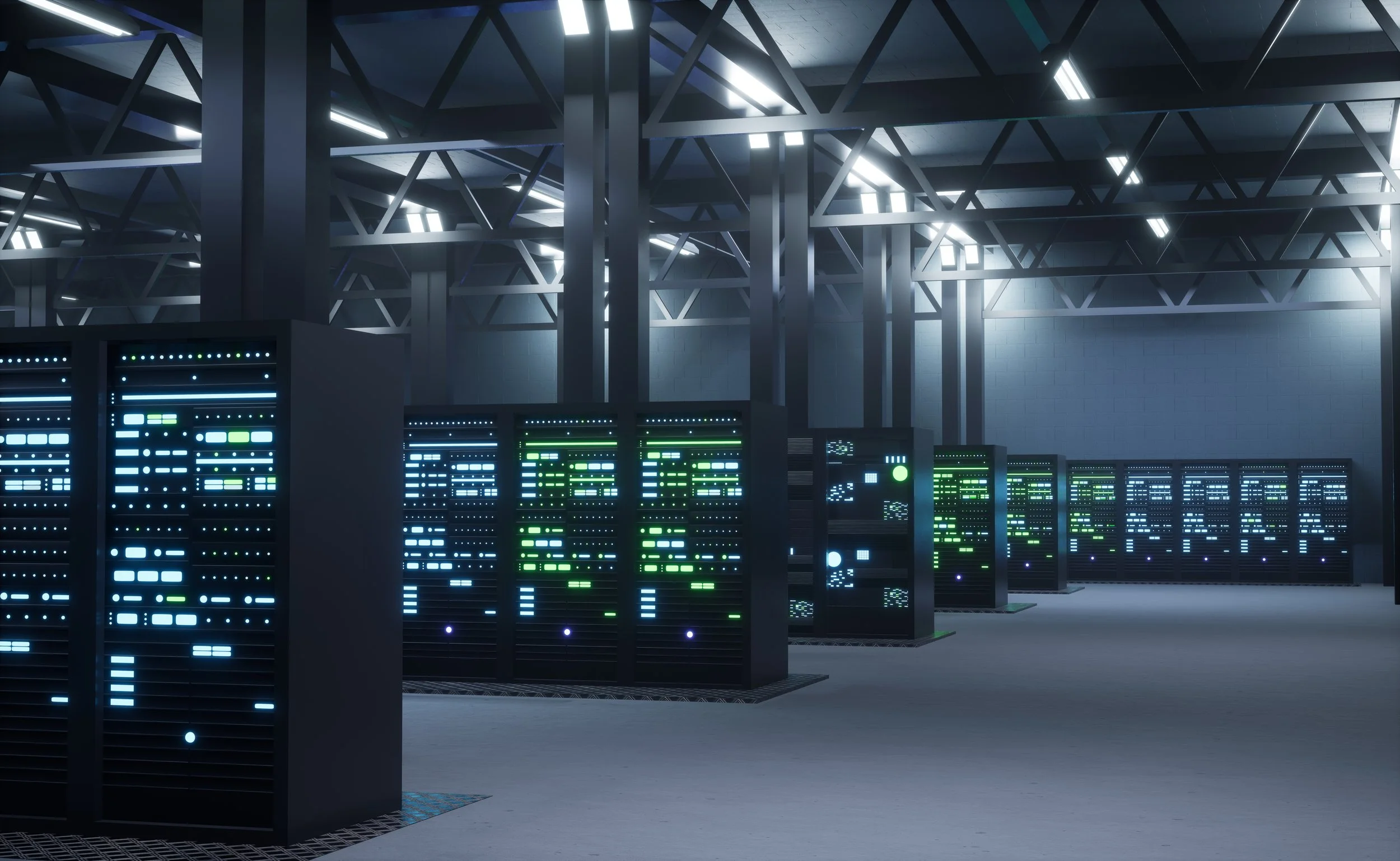
Modern data center providing cloud services enabling businesses access to computing resources, storage, demand, internet, server room, and infrastructure.
The United States is undergoing an unprecedented infrastructure build-out that has nothing to do with highways or bridges. Across Virginia, Texas, Ohio, Georgia, and the Pacific Northwest, civil engineers are breaking ground on some of the most power- and land-intensive facilities ever constructed: hyperscale data centres. Fuelled by artificial intelligence, cloud computing, and the exponential growth of digital services, these facilities are reshaping the civil engineering workload in ways that few could have predicted five years ago.
The numbers are staggering. North America reached 39 gigawatts of installed data center capacity by the end of 2025, with an additional 35 GW under construction. The global data centre sector is projected to grow at a 14% compound annual growth rate through 2030, requiring an estimated $3 trillion in infrastructure investment. In the United States, data centres are expected to represent 30 to 40 percent of all new net electricity demand by 2030. Single buildings that once delivered 4 to 12 megawatts are now just data halls within multi-hundred-megawatt campuses, constructed in phases as industrial assets.
For civil engineers, this is not simply a larger version of the work they already do. Site work for hyperscale data centres involves compressed schedules, extraordinary utility demands, phased campus-scale earthwork, and a permitting environment that is evolving rapidly. It demands fluency in a broad stack of federal, state, and local codes – and an understanding of how those codes are being stretched, revised, and challenged by the pace of this sector.
This post examines the civil engineering dimensions of data centre development: site selection criteria, grading and earthwork requirements, utility infrastructure design, stormwater permitting, and the key U.S. standards that govern the work at every phase. Understanding the code environment serves as the foundation from which everything else must be built, whether your firm is entering this market for the first time or deepening an existing practice.
1. The Scale of the Problem: Why Data Centers Are a Civil Engineering Challenge
Data centres are often discussed in terms of megawatts, terabytes, and server racks. Civil engineers know them by something more fundamental: acres disturbed, cubic yards moved, linear feet of utility trench, and storm events managed. The civil work on a hyperscale campus can involve hundreds of acres of clearing and grading, deep utility corridors carrying high-voltage transmission lines and large-diameter water mains, and stormwater systems designed to handle runoff from what are effectively small industrial cities.
The Department of Energy characterises data centres as one of the most energy-intensive building types in existence, consuming 10 to 50 times more energy per square foot than a typical commercial office building. As AI workloads have accelerated, rack densities have climbed — some AI server configurations now exceed 200 kW per rack, compared to 5 to 10 kW per rack in conventional facilities just a decade ago. Each megawatt of IT load requires roughly 1.2 to 1.5 megawatts of total facility power once mechanical and electrical losses are accounted for, and each megawatt requires cooling systems with commensurate water and infrastructure demands.
For the civil engineer, this information translates directly into site requirements. Substations, cooling towers, emergency generators, fuel storage systems, and backup battery systems all occupy significant site footprints and generate their own utility, grading, drainage, and permitting demands— on top of the building pad itself. On a 200-MW campus, the supporting infrastructure can easily exceed the building footprint in land area.
Key Statistic
The five largest hyperscalers have announced approximately $710 billion in capital expenditures for 2026 alone — a figure sufficient to support roughly 35 GW of new or refreshed global data center capacity. U.S. projects account for the dominant share of that activity, concentrated in Virginia, Texas, Ohio, Georgia, Oregon, and Arizona.
2. Site Selection: What Civil Engineering Criteria Drives the Decision
Data centre site selection is no longer primarily a real estate exercise. Power availability has become the single most important site criterion, followed by community support, transmission access, water availability, and permitting timeline. Civil engineers are increasingly involved in site selection—not just site development—because the feasibility of a campus depends on infrastructure questions that only engineers can properly evaluate.
2.1 Power Access and Transmission Infrastructure
Hyperscale data centres now routinely require 100 MW or more of continuous power, and large AI-focused campuses are being designed for 500 MW to 1 GW. Grid interconnection for loads at this scale is governed by Federal Energy Regulatory Commission (FERC) rules, specifically the interconnection procedures established under FERC Order 2003 and its successors. The DOE formally urged FERC in 2025 to initiate rulemaking to clarify federal jurisdiction for large electrical loads exceeding 20 MW — a regulatory gap that continues to create uncertainty for developers.
Transmission interconnection for a large campus can take five or more years under conventional grid processes. This reality has pushed many hyperscalers toward co-located or behind-the-meter generation: natural gas turbines, fuel cells, and battery energy storage systems (BESS) designed as transitional infrastructure while grid connections are established. Civil engineers designing these sites must plan for on-site generation pads, fuel storage containment systems, and the access roads and utility corridors that integrate generation assets with the building load.
2.2 Water Availability and Cooling Infrastructure
Cooling is the second major infrastructure constraint after power. Most hyperscale facilities use evaporative cooling towers, which consume between 1 and 3 million gallons of water per day per 100 MW of IT load — depending on climate, equipment efficiency, and cooling system design. Site selection must account for proximity to municipal water sources, access to reclaimed water systems, and the permitting requirements of regional water management districts for large industrial water users.
Water use permits for data center cooling systems are increasingly subject to scrutiny in water-stressed regions. Arizona, Nevada, and parts of Texas now impose rigorous water efficiency standards for new industrial water users, and some municipalities have begun conditioning data center approvals on commitments to use reclaimed water for cooling.
2.3 Geotechnical and Topographic Suitability
The building pad and supporting infrastructure for a hyperscale campus impose significant structural loads and require a stable foundation. Civil engineers conducting site feasibility analyses must evaluate the following:
• Bearing capacity and soil classification under ASTM D2487 (Unified Soil Classification System)
• California Bearing Ratio (CBR) values for access road and laydown area design
• Groundwater depth and its implications for utility trench construction, dewatering requirements, and foundation design
• Slope conditions and the cut/fill balance achievable across the site
• Presence of wetlands, floodplains, or other regulated features under Section 404 of the Clean Water Act and the Army Corps of Engineers' jurisdictional determination process
3. Grading and Earthwork: Standards, Volumes, and Code Requirements
The earthwork scope on a hyperscale data center campus is substantial. A 200-acre site with multiple building pads, substations, cooling towers, access roads, parking areas, and laydown zones can involve hundreds of thousands of cubic yards of cut and fill. Given compressed schedules — many hyperscale owners demand delivery timelines measured in months, not years — earthwork must proceed with precision from the outset.
3.1 Governing Codes and Standards for Grading
Site grading on commercial and industrial projects in the United States is primarily governed at the local and state level, but it draws from a well-established body of national standards. The key references include:
| Standard/Code | Issuing Body | Relevance to Data Center Site Work |
|---|---|---|
| IBC Chapter 18 / IEBC | ICC | Soil investigation, foundation design criteria, fill compaction requirements |
| ASCE 7-22 | ASCE | Soil investigation, foundation design criteria, fill compaction requirements |
| ASTM D698 / D1557 | ASTM | Standard test methods for laboratory compaction of soil (Proctor test) — basis for compaction specifications |
| ASTM D6938 | ASTM | In-place density and water content of soil using nuclear gauges — field compaction testing |
| AASHTO M 145 | AASHTO | Classification of soils for highway subgrade materials; used for road subbase design on site access |
| EPA Construction General Permit (CGP) | EPA / NPDES | Required for construction activities disturbing 1 acre or more; mandates SWPPP and BMP installation |
| Local Grading Ordinances | County / Municipality | Maximum cut/fill slopes, drainage setbacks, grading permit thresholds — vary by jurisdiction |
3.2 Compaction Standards and Fill Placement
Fill compaction specifications on data center sites typically require a minimum of 95 percent of Standard Proctor maximum dry density (ASTM D698) for structural fill beneath building pads, and 90 percent for general site fill. Where high-load equipment pads — substations, cooling towers, backup generators — are involved, geotechnical engineers may specify modified Proctor (ASTM D1557) at 95 percent or greater, along with deeper soil improvement or replacement.
The International Building Code (IBC) Chapter 18 governs foundation and soil requirements for building construction, including fill placement requirements. Section 1804.5 of the IBC requires that fills used to support foundations be designed in accordance with accepted engineering practice and comply with the geotechnical report. On data center projects, phased development creates an important challenge: later building phases are often constructed adjacent to recently placed fills from earlier phases, requiring careful attention to settlement monitoring and compaction documentation.
3.3 Earthwork Balance and Scheduling
On large campuses where grading quantities are significant, achieving earthwork balance — minimizing the import or export of material — is a major cost lever. Civil engineers use mass haul analysis and phased grading plans to sequence cut and fill operations across a campus buildout. On sites where balance is unachievable due to topography or soil quality, imported structural fill or mass concrete fills in low areas may be necessary. The selection and placement of imported fill must comply with the project's geotechnical specifications and local permitting conditions.
Engineering Note: Seismic Site Classification
ASCE 7-22 Section 11.4 requires that all structures be assigned a Site Class based on the shear wave velocity of the upper 30 meters of soil (Vs30), standard penetration test N-values, or undrained shear strength. Data center structures — which are typically classified as Risk Category III under IBC Table 1604.5 due to their importance to national infrastructure — must be designed for the seismic design category determined from Site Class and spectral acceleration values. Civil engineers must ensure that the geotechnical report provides the Site Class determination required to complete the structural design.
4. Utility Infrastructure: The Civil Engineering at the Heart of a Data Campus
If earthwork defines the shape of a data center campus, utility infrastructure defines its function. Civil engineers on these projects are responsible for designing and coordinating a dense network of subsurface and overhead systems that must be installed, tested, and commissioned at a pace that keeps pace with the building structure above.
4.1 Electrical Utility Coordination and High-Voltage Conduit Systems
Power delivery to a hyperscale data center begins at the utility substation — often a new or expanded facility built specifically to serve the campus. Civil engineers design the conduit and duct bank systems that carry high-voltage feeders from the substation to the building's main switchgear. These duct bank systems can involve multiple 5-inch or 6-inch conduits encased in concrete, running in deep utility corridors across the site.
The National Electrical Code (NFPA 70) establishes the installation requirements for electrical conduit and duct bank systems, including minimum cover depths, separation requirements, and encasement dimensions. For high-voltage systems above 600V, Article 230 and Article 300 of NFPA 70 govern installation. Most jurisdictions also enforce the National Electrical Safety Code (NESC, ANSI C2) for utility-side infrastructure, which governs the electrical utility's facilities up to the point of delivery.
4.2 Water and Wastewater Infrastructure
Cooling systems are the dominant driver of water demand on a hyperscale campus. Civil engineers must design the domestic water, industrial process water, and fire suppression systems that serve the facility, typically from a connection to the municipal water system. The relevant codes include:
• NFPA 24: Standard for the Installation of Private Fire Service Mains and Their Appurtenances — governs all fire water supply piping on private property
• NFPA 13: Standard for the Installation of Sprinkler Systems — governs interior fire suppression system design, with civil engineers coordinating the site-side water supply
• AWWA C900 / C905: PVC Pressure Pipe and Fittings standards — commonly specified for site water mains
• Local water authority requirements — most municipalities require hydraulic modeling of the existing system to demonstrate that the data center's demand can be met without degrading service to adjacent customers
Wastewater from cooling tower blowdown, HVAC condensate, and sanitary fixtures must be conveyed to the municipal sewer system or handled on-site. The volume of cooling tower blowdown — water discharged to maintain water quality in the cooling loop — can be substantial. Civil engineers must size sanitary and industrial wastewater systems accordingly, and coordinate with the municipal utility to confirm capacity and, in some cases, pretreatment requirements.
4.3 Natural Gas and Fuel Infrastructure
Where on-site generation is incorporated — natural gas turbines, reciprocating engines, or fuel cells — civil engineers must design the underground gas distribution systems and aboveground fuel storage that support them. Diesel fuel storage for emergency generators is required under NFPA 30 (Flammable and Combustible Liquids Code), which governs tank sizing, secondary containment, setbacks, and venting. Natural gas distribution on private property falls under NFPA 54 (National Fuel Gas Code) and the applicable utility's distribution standards.
Emergency generators are a universal feature of data center design. On a large campus, the combined generator capacity can reach hundreds of megawatts, requiring large above-ground or underground fuel storage systems, significant secondary containment structures, and careful site planning to maintain code-required separation distances between fuel systems and building structures.
Emerging Design Challenge: Behind-the-Meter Generation
As grid interconnection timelines for large loads now stretch five years or more in many markets, hyperscalers are increasingly incorporating on-site gas turbines, fuel cells, and battery storage systems as interim or permanent power solutions. Civil engineers must plan for large equipment pads, fuel storage containment, exhaust routing, and access roads for this generation infrastructure — while ensuring compliance with NFPA 30, NFPA 54, and applicable EPA air permit requirements for backup power generators.
5. Stormwater Management: Navigating NPDES and Post-Construction Requirements
No aspect of data center civil engineering carries greater permitting complexity — or greater enforcement risk — than stormwater management. These are large sites with massive impervious cover, located in jurisdictions with increasingly stringent post-construction stormwater requirements. Getting the stormwater design right at the outset is not optional; it is a precondition for construction authorization.
5.1 Construction Stormwater: NPDES Construction General Permit
Any construction activity that disturbs one acre or more of land must obtain coverage under the EPA's National Pollutant Discharge Elimination System (NPDES) Construction General Permit (CGP) or an equivalent state permit. A hyperscale data center campus — which may disturb hundreds of acres — must obtain a Notice of Intent (NOI) prior to commencement of land disturbance and develop a site-specific Stormwater Pollution Prevention Plan (SWPPP).
The SWPPP must identify all potential sources of stormwater pollution, describe best management practices (BMPs) for erosion and sediment control, and establish inspection protocols. The EPA's 2022 Construction General Permit renewed requirements that are now in effect across most states, including:
• Stabilization of disturbed areas within 7 days of the last land disturbance activity (14 days in some regions)
• Installation of perimeter controls before land disturbance begins
• Sediment basin sizing requirements for sites disturbing 10 or more acres draining to a common point
• Weekly inspections and post-storm inspections within 24 hours of a qualifying precipitation event
• Turbidity sampling and monitoring where discharges to sensitive receiving waters are anticipated
5.2 Post-Construction Stormwater: Managing Runoff from Large Impervious Surfaces
The post-construction stormwater challenge on a hyperscale campus is significant. Data center buildings are large, low-slope structures with minimal roof drainage time of concentration. Surrounding areas include parking lots, access roads, substation yards, and equipment pads — all of which generate rapid, high-volume runoff. The combined impervious fraction on a developed data center campus can exceed 70 to 80 percent of total site area.
Post-construction stormwater management must comply with both federal water quality requirements (under the NPDES Municipal Separate Storm Sewer System, or MS4, permit program) and state and local quantity control standards. Many jurisdictions require developers to demonstrate that post-construction peak discharge rates do not exceed pre-development rates for the 2-year, 10-year, and 100-year storm events. Others impose volume-based requirements or water quality treatment standards.
Civil engineers typically address these requirements through a combination of: • Detention basins designed using the Modified Puls routing method or reservoir routing to attenuate peak flows
• Extended dry or wet detention to provide water quality treatment (typically 80 percent total suspended solids removal)
• Underground storage vaults where surface land area is constrained
• Bioretention cells and permeable pavement where site conditions and municipal requirements favor green infrastructure solutions
• Culvert and outfall design in compliance with FHWA hydraulic design standards and ASCE Manual of Engineering Practice No. 36
5.3 FEMA Flood Zone Compliance and ASCE 24
Data center sites are frequently located in areas subject to FEMA Special Flood Hazard Areas (SFHAs) or near mapped 100-year floodplains. Where a project is located within or adjacent to a SFHA, compliance with ASCE 24-24 (Flood Resistant Design and Construction) is required. ASCE 24-24 sets minimum finished floor elevations above the Base Flood Elevation (BFE), establishes dry floodproofing and wet floodproofing criteria, and specifies requirements for utilities and mechanical equipment in flood-prone areas.
For data centers classified as Risk Category III or IV under the IBC, ASCE 24-24 imposes freeboard requirements of 1 to 2 feet above BFE — meaning the lowest floor of the structure must be elevated above the regulatory flood level by that margin. Civil engineers designing sites in or near floodplains must account for this requirement in both grading design and the structural engineer's foundation design.
6. Building Code Framework: IBC Occupancy, Risk Category, and Site Development
Data centers occupy a complex position within the International Building Code (IBC). The ICC's 2025 code development cycle included several proposals to provide clearer direction for data centers as a building type — a recognition that the existing prescriptive code framework was not designed with these facilities in mind. A dedicated ICC Data Center Guideline is now in development to provide near-term clarity for code officials, designers, and owners.
6.1 Occupancy Classification
Most data centers are classified as Business (Group B) occupancies under IBC Table 508.1, though some configurations — particularly those with significant storage of combustible materials or mechanical equipment — may trigger S-1 or S-2 occupancy classifications or mixed-occupancy conditions. The occupancy classification drives:
• Required fire protection systems under IBC Chapter 9 and NFPA 13
• Egress requirements under IBC Chapter 10
• Allowable height and area under IBC Chapter 5, which depends on construction type and the presence of automatic sprinklers
• Accessibility requirements under the ADA and IBC Chapter 11
6.2 Risk Category and Its Implications for Civil Design
IBC Table 1604.5 assigns Risk Categories to buildings based on their consequence of failure. Data centers that serve critical national infrastructure — financial systems, communications networks, government services — are typically assigned Risk Category III, and in some cases Risk Category IV. This classification has direct consequences for civil and structural design:
• Higher importance factors (Ie) apply to seismic and wind load calculations under ASCE 7-22, increasing the design loads the structural engineer must account for
• ASCE 24-24 imposes additional freeboard requirements for Risk Category III and IV structures in flood zones
• Risk Category III and IV structures require more rigorous geotechnical investigation and documentation under IBC Section 1803
• Fire flow requirements and on-site water storage may be increased for Risk Category III facilities under local fire codes
7. Permitting Complexity: Section 404, Air Permits, and Local Approvals
Data center projects face a layered permitting environment that civil engineers must navigate in parallel with design. The permitting timeline — not the construction timeline — is often the critical path on these projects.
7.1 Clean Water Act Section 404 Permits
Where data center site development involves impacts to wetlands or waters of the U.S., a Section 404 permit from the U.S. Army Corps of Engineers is required. The Army Corps administers both Nationwide Permits (NWPs) — which authorize minor impacts through a streamlined process — and Individual Permits, which require a full public interest review for larger or more complex impacts. Civil engineers must conduct jurisdictional delineations early in the site selection and design process to identify regulated features and determine whether proposed impacts can be minimized to fit within NWP thresholds.
7.2 Air Permits for Emergency Generators
Emergency generators are a universal feature of data center design — and they are a major air quality permitting trigger. A large campus with hundreds of megawatts of backup generation capacity can involve dozens of large diesel or gas generator sets, each requiring its own air emissions inventory. State air agencies typically require Title V or minor source air permits for facilities that exceed threshold emission rates for criteria pollutants. Civil engineers must coordinate generator siting, exhaust stack heights, and spacing to support the air quality modeling and permit applications required before construction can proceed.
7.3 Local Discretionary Approvals
Beyond federal and state permits, data center projects typically require local discretionary approvals including rezoning (many data center campuses are developed on land originally zoned for agriculture or light industrial use), site plan approval, and, in some jurisdictions, a conditional use permit or special exception. Civil engineers prepare the site plans, utility layouts, grading plans, and drainage calculations that form the technical backbone of these local approval submissions. The quality and completeness of these materials directly affects the speed and outcome of the approval process.
8. What This Means for Civil Engineering Firms in 2026
The data center sector represents one of the few areas of broad construction growth in a market otherwise shaped by tariff uncertainty, labor shortages, and compressed federal infrastructure funding. For civil engineering firms with the capacity and expertise to compete in this space, the opportunity is substantial — and growing. But entry requires more than a willingness to take on large projects. It requires a specific depth of technical and regulatory knowledge.
Firms entering this market should invest in the following capabilities:
• Deep fluency in NPDES permitting and SWPPP preparation at the scale of large industrial sites
• Geotechnical coordination skills to manage the interface between civil grading design and structural foundation requirements under IBC Chapter 18 and ASCE 7-22
• High-voltage utility coordination experience, including duct bank design under NFPA 70 and substation civil design
• Familiarity with the Uptime Institute Tier Standard and ANSI/TIA-942, which govern infrastructure redundancy and directly influence the quantity and arrangement of civil infrastructure on site
• Experience with Army Corps Section 404 permitting and wetland delineation processes, particularly in the Southeast and Mid-Atlantic where major data center markets are concentrated
• Working knowledge of ASHRAE 90.4-2022, which sets energy efficiency standards for data centers and influences mechanical and site design decisions including cooling tower configurations and water management
Speed is the competitive currency of this market. Hyperscale clients do not tolerate schedule overruns. Civil firms that can deliver complete, code-compliant permit packages on compressed timelines — and who understand the full regulatory landscape before the first shovel hits the ground — will find consistent, long-term work in the country's most active construction sector.
Conclusion
The AI-driven data center boom is not a technology story. It is an infrastructure story — and civil engineers are at the center of it. From the geotechnical analysis that determines whether a site can bear the load, to the stormwater systems that manage runoff from hundreds of acres of impervious surface, to the utility networks that deliver hundreds of megawatts of continuous power, civil engineering defines the feasibility and performance of every data center campus in America.
The code environment governing this work is complex and evolving. IBC occupancy and risk classification, ASCE 7-22 design loads, NPDES stormwater permitting, NFPA fire protection and fuel storage standards, FEMA flood zone requirements, and Army Corps Section 404 permits all converge on a single site. Civil engineers who understand how these requirements interact — and who can navigate the permitting landscape at the pace this market demands — are positioned to do some of the most consequential work in the profession.
The demand is real, the projects are large, and the standards are clear. The question for every civil engineering firm in 2026 is simply whether they are ready to meet it.
