
Coastal Resilience Engineering: Redesigning America's Shorelines for Sea Level Rise
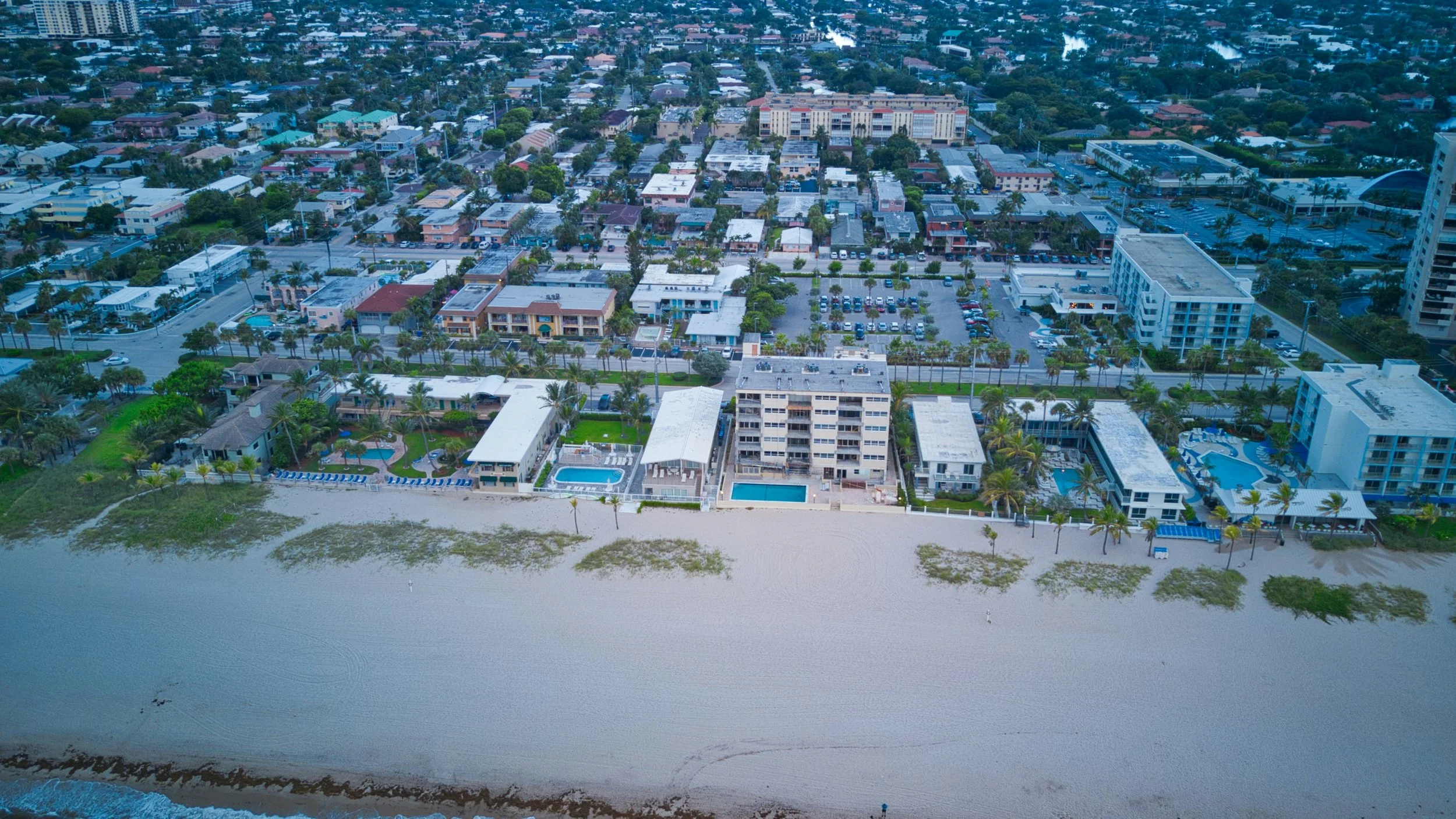
The American coastline is losing ground. Sea levels are rising at rates that vary by location but average around 3 to 4 millimeters per year nationally, with some regions on the Atlantic and Gulf Coasts experiencing faster rise due to land subsidence compounding the global trend. Storms are more intense. Beaches that existed 50 years ago don't exist in the same form today. And the communities, infrastructure, and real estate that sit at the water's edge are facing a question that used to be theoretical: what do you do when the land your property sits on is disappearing?
Fourteen percent of the U.S. coastline is currently armored, meaning it's protected by some form of hard engineered structure, a seawall, bulkhead, revetment, or similar barrier. That percentage could double by 2100, costing up to $300 billion. But the engineering community has been learning, sometimes the hard way, that hard armoring isn't always the answer. Seawalls protect the land behind them while accelerating erosion in front of them and on either side. They reflect wave energy rather than absorbing it, which can increase scour at the base of the wall and create faster erosion on adjacent unarmored shoreline.
This post covers the three main categories of coastal protection, when each is appropriate, what the engineering involves, how the IIJA's $492 million National Coastal Resilience Fund is shaping the direction of coastal projects, and what property owners and developers in coastal zones need to understand.
1. The Three Approaches: Hard, Soft, and Hybrid
Hard armoring: seawalls, bulkheads, and revetments
Hard armoring structures, concrete seawalls, steel sheet pile bulkheads, and rock revetments, provide reliable protection for the land immediately behind them against wave energy and storm surge. They work. The question engineers and coastal planners are increasingly asking is whether they work well enough, for long enough, at a cost that justifies their environmental and downstream consequences.
The problems with hard armoring are well-documented. A seawall prevents natural sediment exchange between the upland and the nearshore. Beaches in front of seawalls tend to erode faster than beaches fronting natural shorelines because the wall prevents the landward migration of the shoreline that would otherwise occur naturally in response to sea level rise. The wave energy that the wall reflects scours the seabed in front of it. And at the ends of the wall, where armored shoreline meets unarmored shoreline, erosion is often accelerated by the change in wave reflection conditions. Hard armoring solves an immediate problem while creating a cascade of adjacent problems that eventually require more hard armoring.
Living shorelines: nature-based protection
Living shorelines use natural materials and ecological elements, marsh grasses, oyster reefs, submerged aquatic vegetation, coir fiber logs, and strategic placement of rock sills, to stabilize shorelines against erosion. They work differently from hard armoring: instead of reflecting wave energy, they absorb it. Marsh vegetation reduces wave height across a planted zone. Oyster reefs reduce wave energy and trap sediment. The living system grows and evolves over time, unlike a concrete wall that is static from the day it's installed.
NOAA has cataloged more than 200 living shoreline projects across the country through its Habitat Blueprint program. The accumulated evidence shows that living shorelines can reduce erosion rates substantially in wave environments where they're appropriate, provide water quality improvement through root zone filtration, create habitat for fish and birds, and store carbon in marsh soil. They're also typically less expensive to build and maintain than equivalent hard structures, though with a longer establishment period before full effectiveness is achieved.
$492 million
Allocated under the IIJA's National Coastal Resilience Fund for nature-based coastal infrastructure projects. Combined with growing state programs, this is the largest federal investment in soft and hybrid coastal protection in American history.
The primary limitation of living shorelines is that they're appropriate for moderate wave energy environments. On exposed ocean coastlines with significant wave action, or in areas with very high storm surge exposure, marsh grass and oyster reefs don't provide enough protection on their own. That's where hybrid approaches come in.
Hybrid approaches: engineering with nature
Hybrid coastal protection combines engineered structures with ecological elements to get the protective benefit of hard structures while retaining some of the ecological and adaptive capacity benefits of natural systems. A low rock sill placed offshore creates a low-wave-energy zone behind it where marsh vegetation can establish and thrive. Artificial oyster reef structures provide both wave attenuation and habitat. Beach nourishment, where sand is dredged from offshore and placed on an eroding beach, is a hybrid approach in that it works with the natural sediment system rather than replacing it with a rigid barrier.
The engineering of hybrid systems requires understanding both the structural requirements of the hard elements and the ecological requirements of the living elements. The rock sill needs to be sized and positioned to reduce wave energy to levels where marsh grass can survive, but not so aggressively that it creates dead water behind it. The timing of the living component installation relative to the structural component matters because marsh grass planted before the sill is in place may not survive the first major storm, while marsh grass planted after the sill has settled in has a much better establishment rate.
2. What Determines Which Approach Is Right
The choice between hard, soft, and hybrid coastal protection isn't just a preference. It's an engineering determination based on the specific wave climate, tidal range, sediment availability, rate of sea level rise at the site, upland land use, and the nature of what's being protected.
Wave energy: Higher wave energy environments favor harder structures or well-engineered hybrid systems. Sheltered bays, estuaries, and the leeward sides of barrier islands are better candidates for living shorelines than exposed ocean coasts.
Slope and beach width: Living shorelines need some intertidal area to establish. A shoreline that drops sharply to deep water without an intertidal zone limits what vegetation can colonize. A gently sloping intertidal zone with consistent tidal exchange is ideal.
What's being protected: A single-family home on a mildly eroding shoreline might be well served by a living shoreline. A wastewater treatment plant, a hospital, or a densely developed urban waterfront with billions in assets directly at the water's edge may require the more definitive protection of hard armoring, accepting the downstream trade-offs.
Time horizon: Living shorelines adapt to rising sea levels by migrating landward if space is available. Hard structures maintain a fixed position and become increasingly challenged as sea levels rise. For a property owner thinking about 50 years rather than 10, a hybrid approach that includes landward accommodation space may be more resilient than hard armoring that will need replacement or raising in several decades.
3. The Virginia Model: Incentivizing Living Shorelines
Virginia has become a national leader in coastal resilience policy by flipping the default approach to shoreline protection. Most coastal states treat hard armoring as the standard option and require justification for alternatives. Virginia's Shoreline Erosion Advisory Service operates on the opposite principle: living shorelines are the default, and property owners seeking hard armoring must demonstrate that a nature-based approach is not feasible for their site.
The state pairs this policy preference with technical assistance, helping property owners understand what a living shoreline would look like on their site, what it would cost, and who can design and install it. The result has been a substantial increase in living shoreline projects relative to hard armoring applications, with ripple effects on the coastal engineering consultant and contractor ecosystem in the region.
EESI and other policy organizations have pointed to Virginia's approach as a model that other coastal states are beginning to study and adopt elements of. The IIJA's National Coastal Resilience Fund is structured to prioritize nature-based and hybrid approaches, directing the largest share of federal coastal resilience investment toward the methods that provide the most ecological co-benefits alongside the direct protection value.
4. Managed Retreat: The Conversation Nobody Wants to Have
There's a third option for some coastal properties that engineers and planners are increasingly raising even though the political and financial resistance to it is enormous: managed retreat, meaning the deliberate relocation of structures and infrastructure away from the most vulnerable coastal areas rather than defending them in place.
Managed retreat doesn't mean abandoning coastlines. It means accepting that some areas, particularly those with very high erosion rates, very low elevation, or very high storm surge exposure, cannot be defended economically over a multi-decade time horizon, and that the long-term investment in those properties would be better directed toward relocating people and infrastructure to safer ground and allowing the coastal ecosystem to migrate naturally.
This is genuinely difficult. People's homes, communities, and life savings are tied to coastal properties. The political economy of telling someone that their beachfront house isn't defensible runs into obvious resistance. But the engineering math in some locations is unambiguous: the cost of protecting a property against a sea level rise trajectory of 1 to 2 feet by 2100, plus the more intense storms that accompany that trajectory, exceeds the value of the property itself. Understanding that math and communicating it honestly, even when the audience doesn't want to hear it, is part of what coastal engineers owe their clients.
For Coastal Property Owners and Developers
If you own or are evaluating coastal property, three engineering questions frame the risk picture. First: what is the current erosion rate at this specific shoreline, and what is the projected rate under intermediate sea level rise scenarios? Second: what protection options are feasible on this site, and what do they cost to install and maintain over a 30-year horizon? Third: what is the residual risk after protection, meaning what does the structure face during a 100-year or 500-year storm event even with protection in place? A licensed coastal engineer can answer all three. Buying or developing coastal property without those answers in hand is accepting risks that haven't been quantified.
Conclusion
The engineering of coastal resilience is moving in a clear direction: away from the assumption that hard armoring is always the answer and toward a more nuanced evaluation of when nature-based and hybrid approaches can provide comparable protection with better long-term adaptability. The funding environment, with $492 million in federal coastal resilience investment through the IIJA prioritizing nature-based solutions, is reinforcing that direction.
Sea level rise is not a future risk that engineers can defer. The structures being designed today will be operating in a coastal environment with 6 to 12 inches more sea level than today by 2050 under intermediate projections, and potentially more than 2 feet higher by 2100. That reality needs to be in the design basis for every coastal project undertaken today, whether the protection strategy is a seawall, a living shoreline, or a decision to retreat.
