
America's Forgotten Rural Infrastructure: The Problem That Funding Alone Won't Fix
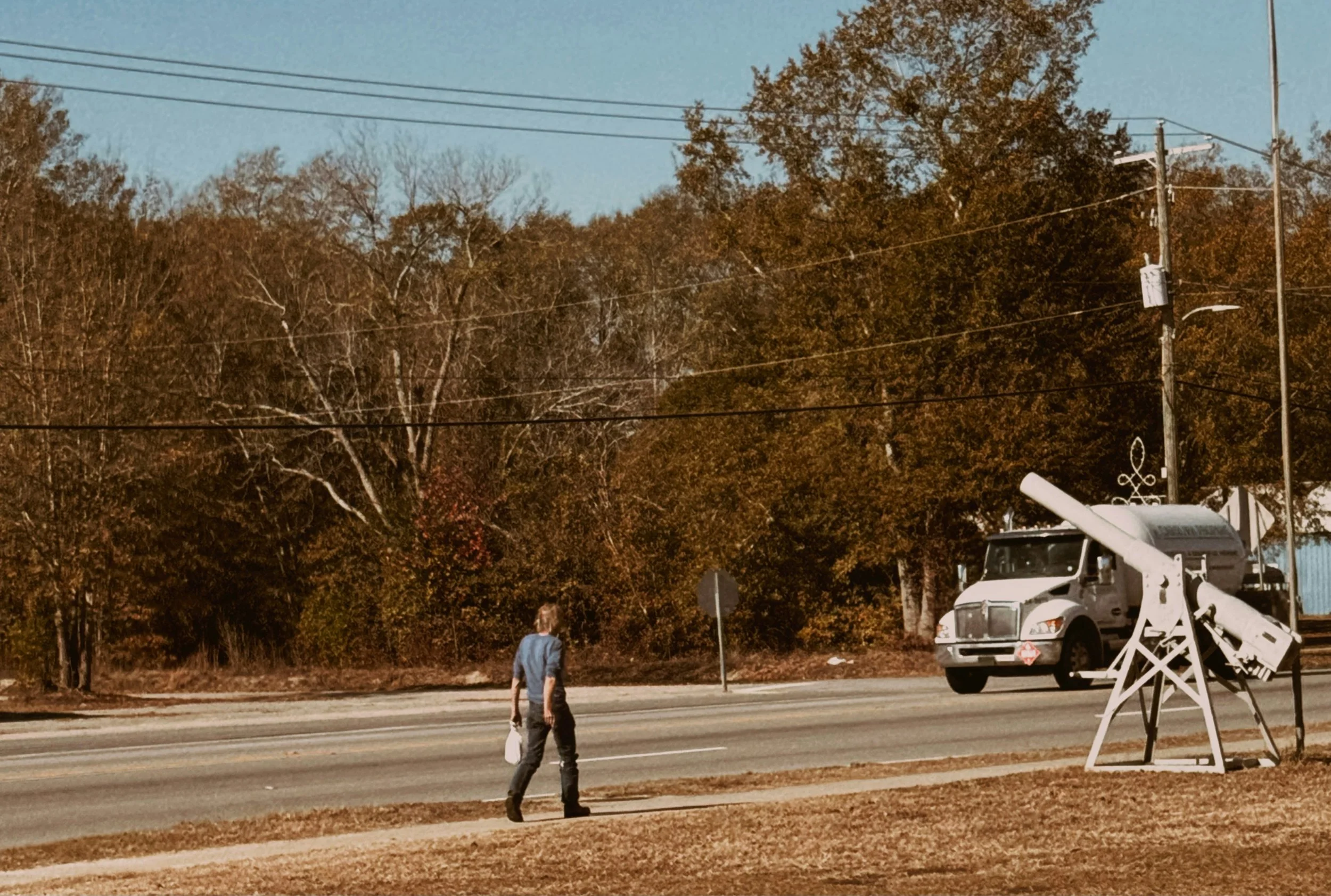
The Infrastructure Investment and Jobs Act directed money to rural communities. The IIJA rural playbook, published by the Biden administration in 2022, outlined dozens of programs specifically targeted at roads, water systems, and broadband in small communities. By April 2026, $591 billion had been directed to more than 72,000 projects nationwide from the IIJA's five-year authorization. Rural America received a significant share of it.
And yet the infrastructure gap in rural communities hasn't closed the way the policy intent suggested it would. Roads outside major metropolitan areas are in measurably worse condition than urban roads. Small community water systems are running on infrastructure that is, in many cases, literally a century old. Broadband connections in rural areas remain inconsistent despite the BEAD program's $42.45 billion allocation. The engineering community is doing its best with what's available, but the honest answer about why rural infrastructure lags is more complicated than funding.
This post covers where the rural infrastructure gap actually is, why it persists despite significant federal investment, what the specific engineering and planning challenges are for small communities, and what the path forward looks like for the communities and engineering professionals who are working on it.
1. Where the Gap Is
ASCE's 2025 Infrastructure Report Card gave roads a D+. That national grade reflects conditions across the country, but the conditions aren't uniform. Urban arterials and interstates, which carry the most traffic and receive the most maintenance investment, are in better condition than the rural collector and local roads that connect farms, small towns, and rural residents to the rest of the network. The 39 percent of major U.S. roads that FHWA data shows are in poor or mediocre condition is disproportionately concentrated outside metropolitan areas.
Water infrastructure tells a similar story. The national drinking water grade is C-, but the distribution of that grade conceals enormous variation. Many large municipal systems have invested consistently in pipe replacement and treatment system upgrades. Many rural systems have not. Small water utilities, serving fewer than 500 service connections, make up the vast majority of the roughly 155,000 public water systems in the United States. Many of these systems have pipes installed in the 1920s through 1950s. They serve small populations that can't generate enough rate revenue to fund the capital replacement programs that urban systems can cross-subsidize across a larger customer base.
155,000
The approximate number of public water systems in the United States. The vast majority serve small communities. Many are operating on infrastructure installed 50 to 100 years ago, with limited capacity to fund replacement.
Broadband is the newest dimension of the rural infrastructure gap and the one that received the most dramatic federal investment. BEAD, the Broadband Equity, Access, and Deployment Program, has $42.45 billion in committed funding, making it the largest federal broadband investment in history. The COVID-19 pandemic made the consequences of connectivity gaps impossible to ignore: remote workers in rural areas without adequate bandwidth, students unable to connect to online learning, patients who couldn't access telehealth. The infrastructure investment followed. Whether it will close the gap depends on factors that go well beyond the dollar amount.
2. Why Funding Alone Isn't Enough
The most important reason rural infrastructure consistently lags is one that infrastructure legislation rarely addresses directly: engineering and administrative capacity.
A federal grant program requires an application. Writing a competitive application for a CDBG infrastructure grant, an IIJA transportation alternatives set-aside, or a USDA Rural Development water loan requires engineering plans sufficient to establish project scope, cost estimates, and technical feasibility. Many rural counties and small municipalities don't have in-house engineering staff. They rely on consulting engineers for project work, but they often can't afford to hire those consultants for grant application preparation without knowing whether the application will be funded.
This is the chicken-and-egg problem of rural infrastructure finance. Federal programs increasingly require 'shovel-ready' projects with completed environmental review, engineering designs, and right-of-way acquisition before they'll award funding. Completing that pre-work costs hundreds of thousands of dollars. A rural county with a $2 million annual public works budget can't afford to pre-engineer five different grant applications with the hope that one will be funded. So shovel-ready projects cluster in the communities that can afford to prepare them, which tends to be larger, more resource-rich communities, not the smallest and most underserved.
The technical assistance gap
DVRPC, the regional planning agency serving the Philadelphia and Trenton area, has responded to this dynamic by hiring consultants to perform pre-application engineering tasks at no cost to municipalities for projects eligible for the Transportation Alternatives Set-Aside Program. The EPA announced $31 million in grant funding for training and technical assistance specifically to improve water quality in small and rural communities. These programs recognize that the administrative and engineering capacity gap is real and that the solution is to bring that capacity to communities, not to require communities to build it themselves.
The USDA Rural Development programs, including the Water and Environmental Program loans and grants and the Community Facilities Direct Loan program, operate through a network of state offices specifically designed to work with small communities that lack in-house expertise. The USDA field staff serves as a de facto technical assistance resource, helping small utilities navigate the application process and the project delivery requirements. This model works reasonably well for the communities that engage with it. The challenge is reaching the communities that don't know it exists.
3. Rural Road Engineering: The Specific Challenges
Rural roads present engineering challenges that are different from urban road design, and those differences are often underappreciated by engineers who primarily work in metropolitan contexts.
Rural roads frequently carry loads they were never designed for. Agricultural equipment has grown dramatically in size and weight over the past 30 years. A modern combine harvester or grain cart exceeds the legal load limits for many rural roads in the Midwest, but enforcement is difficult and economically impractical during harvest season. The pavement deterioration from these loads compounds the already limited maintenance budgets that rural counties have available.
Drainage design is often the most critical element of rural road performance. A rural road that floods during heavy rain events, or that has culverts too small for the watershed they serve, will deteriorate much faster than its pavement design life suggests. Climate-adjusted hydrology is changing the design parameters for rural culverts and road drainage systems: the storms these roads now face frequently exceed what the original drainage infrastructure was designed for. Replacing undersized culverts before they wash out is significantly cheaper than replacing culverts after they've failed and taken sections of road with them.
Gravel road management is an underappreciated specialty that consumes a significant share of rural county road budgets. The United States has approximately 1.4 million miles of unpaved public roads, most of them in rural areas. Managing gravel surface conditions, dust control, drainage maintenance, and the seasonal cycles of freeze-thaw and spring breakup requires systematic planning and consistent maintenance investment. Counties that shift to a data-driven gravel road management program, tracking road conditions and scheduling maintenance proactively rather than reactively, consistently see lower costs and better conditions than counties that manage on a complaint-driven basis.
4. Rural Water Systems: The Century-Old Infrastructure Problem
Small rural water systems are in a genuinely difficult position. The infrastructure is old, the customer base is small, and the revenue available for capital investment is limited. A water system serving 200 connections in a rural county has a fraction of the rate revenue available to a metropolitan utility serving 200,000 connections. The cost per mile of pipe, per linear foot of transmission main, per treatment plant capacity unit, doesn't scale down proportionally with system size. Many rural systems are paying more per gallon of water delivered than urban systems with newer infrastructure and larger customer bases.
The IIJA provided more than $50 billion through EPA's drinking water, wastewater, and stormwater programs. The Clean Water State Revolving Fund, which operates as a federal capitalization grant to states that use the funds for low-interest loans, has been the primary financing mechanism for water infrastructure since 1987. Cumulative CWSRF lending nationally has exceeded $175 billion. States are working to obligate remaining IIJA-supplemented funds before the authorization window closes, creating near-term opportunity for rural systems with projects ready to go.
The challenge is exactly the capacity problem described earlier: a small rural utility may not have the staff to develop an asset management plan, conduct a hydraulic analysis, design a pipe replacement project, and navigate the SRF loan application process simultaneously. Technical assistance programs from EPA, USDA, and state primacy agencies exist specifically to fill this gap, but they require communities to know the programs exist and to actively engage with them.
For Rural Communities: Programs Worth Knowing
USDA Rural Development's Water and Environmental Program (WEP) provides grants and loans specifically for small rural communities for water, wastewater, and solid waste projects. USDA's grant programs can cover up to 75 percent of project costs for very small, low-income communities. EPA's Water Infrastructure Finance and Innovation Act (WIFIA) program provides long-term, low-interest loans for large water infrastructure projects. The EPA also funds a network of rural water technical assistance providers through the National Rural Water Association and affiliated organizations who can provide on-site help at no cost to small utilities. These programs are real, they're funded, and they're underutilized by the communities that need them most.
5. Broadband: The Newest Infrastructure Frontier
The BEAD program's $42.45 billion is a transformative investment, but turning that money into actual broadband service in rural areas requires navigating a set of practical challenges that have nothing to do with the dollar amount.
First, the program requires states to conduct location fabric challenges, identifying which specific addresses lack broadband service above defined speed thresholds. This is fundamentally an engineering and data exercise, and some states have moved through it faster than others. States that completed their challenge processes quickly moved into their subgrant application windows first. States that moved slowly are still working through the pre-application process.
Second, building last-mile broadband in rural areas, running fiber or fixed wireless service to individual homes and businesses spread across low-density geography, is expensive per location. The build cost per connection in a rural county with one home per square mile may be $5,000 to $15,000 or more, compared to a few hundred dollars in a dense urban neighborhood. The BEAD program recognizes this and prioritizes fiber to the home as the preferred technology, with hybrid approaches for areas where fiber economics don't work. Getting the right technology match to the right geography is an engineering and planning task that requires local expertise.
For rural communities waiting on broadband, the realistic timeline is years, not months. States that completed challenge processes in 2024 are beginning subgrantee selection in 2025 and 2026. Construction will follow in 2026 through 2028 for most projects. The BEAD program is large enough to be transformative. The execution timeline reflects the genuine complexity of deploying infrastructure in geography that private markets have consistently found economically difficult.
Conclusion
Rural infrastructure needs are real, documented, and substantial. The federal investment through the IIJA has been historic. But the gap between appropriated dollars and improved infrastructure reflects a challenge that money alone doesn't solve: the engineering capacity, planning capacity, and administrative capacity of small rural communities to identify their needs, develop projects, apply for funding, and manage construction are the binding constraints.
Addressing those constraints requires a sustained commitment to technical assistance, to simplified application processes, and to engineering education and outreach that reaches the communities that are hardest to reach. The engineers, planners, and public works officials who work in rural communities are doing important work with limited resources. The infrastructure conversation that focuses only on dollars without addressing capacity is missing the harder half of the problem.
