
Alkali-Silica Reaction: The Chemistry That Cracks Concrete From the Inside Out
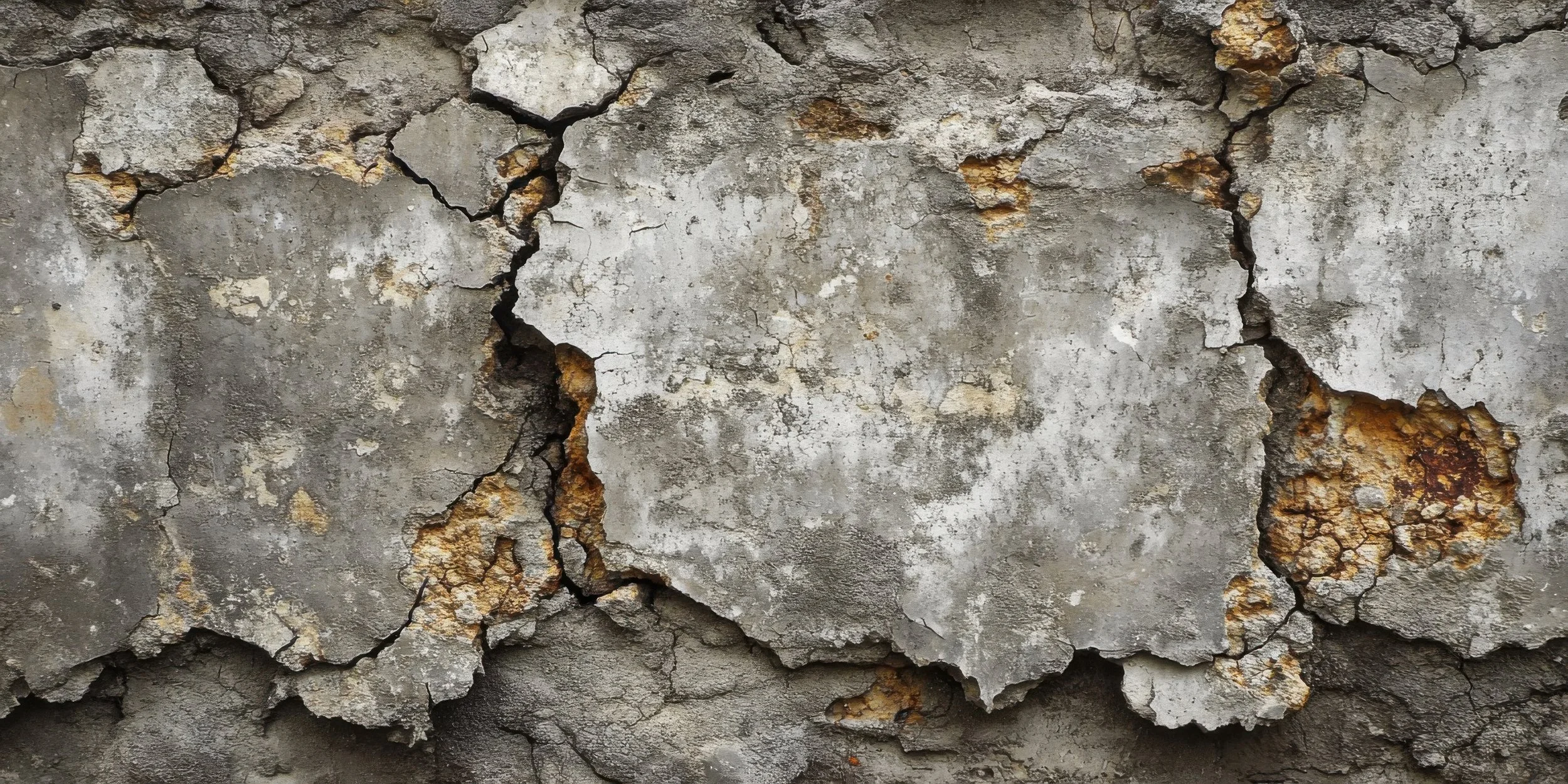
Concrete is usually thought of as chemically inert once it has cured. Mostly it is. But in a proportion of concrete made worldwide, a slow reaction continues for decades between the alkalis in the cement paste and certain forms of silica in the aggregate, producing a gel that swells when it absorbs water and cracks the concrete from within.
The reaction is called alkali-silica reaction, and it was first identified in the 1940s by Thomas Stanton, investigating unexplained cracking in California highway structures. It has since been documented in dams, bridges, pavements, nuclear containment structures, and buildings on every continent. Where the conditions are right, it can take twenty years or more to become visible and then continue progressing for the rest of the structure's life.
This post covers the chemistry that drives it, the three conditions that must coexist for it to occur, how it is distinguished from the other things that crack concrete, what it does to structural capacity, and what can and cannot be done about it once it has started.
1. The Reaction
Portland cement contains sodium and potassium oxides. In the hardened paste these are present as hydroxides, and they give concrete pore solution its characteristically high pH, typically between 13 and 13.5. That high alkalinity is what protects embedded reinforcing steel, so it is a desirable property in most respects.
It is also aggressive toward certain silica minerals. Well-crystallised quartz, the silica in most sound aggregate, is stable in that environment because its silicon-oxygen bonds are ordered and strong. Poorly crystallised or amorphous silica is not. Opal, chalcedony, cristobalite, tridymite, volcanic glass, strained or microcrystalline quartz, and some cherts have disordered structures with reactive silanol groups at the surface.
Hydroxide ions attack those disordered bonds, breaking the silica structure and taking it into solution. The dissolved silica then combines with sodium, potassium, and calcium ions present in the pore solution to form an alkali-silica gel.
Why the gel expands
The gel is hygroscopic. It absorbs water and swells, and depending on composition it can expand to several times its original volume. Gel with high alkali and low calcium content is more fluid and swells more; gel with higher calcium is stiffer and expands less.
That expansion occurs inside a rigid, confined material. The pressure it generates exceeds the tensile strength of the surrounding paste, which is only a few hundred psi, and the concrete cracks. Cracks admit more water, which the gel absorbs, which drives further expansion. The reaction is self-sustaining as long as reactive silica and moisture remain available.
Three conditions
Reactive silica in the aggregate, sufficient alkali in the pore solution, and moisture above roughly 80 percent internal relative humidity. Remove any one and the reaction stops. All three must be present for ASR to occur at all.
2. The Three Necessary Conditions
Reactive aggregate. The aggregate must contain silica in a form vulnerable to alkaline attack. Reactivity is a property of the specific quarry or deposit, not of a rock type in general, which is why local aggregate history matters so much: some sources have decades of good performance while a deposit a few miles away is highly reactive. Testing is the only reliable way to establish it.
Sufficient alkali. The alkali comes primarily from the cement, expressed as sodium oxide equivalent, and the total alkali content of the concrete depends on both the cement's alkali level and the cement content of the mix. Supplementary sources contribute too: some admixtures, some aggregates that release alkali themselves, and external sources such as de-icing salts containing sodium or potassium, and seawater.
Moisture. The gel needs water to swell. Below roughly 80 percent internal relative humidity, expansion effectively stops. This is why ASR is common in dams, bridge substructures, pavements, and foundations, and much rarer in the interior of conditioned buildings. It also explains why a structure can be unaffected for years and then begin expanding after a change in drainage or exposure.
The pessimum effect
One counter-intuitive aspect worth knowing: expansion is not proportional to the amount of reactive aggregate. For some reactive materials, particularly highly reactive ones like opal, the worst expansion occurs at a specific intermediate proportion, called the pessimum content. Below it there is not enough reactive material to generate damaging expansion; above it, the available alkali is spread across so much reactive surface that the gel produced at each site is small and the reaction is diluted.
This matters practically because a small contamination of highly reactive material in an otherwise sound aggregate can be worse than a larger proportion, which defeats the intuition that less reactive material is always safer.
3. Recognising It
ASR produces characteristic surface features, but every one of them can be produced by something else as well, which is why field observation narrows the possibilities rather than confirming a diagnosis.
Surface indications
Map cracking, sometimes called pattern or craze cracking, is the classic surface appearance: an irregular polygonal network of cracks across the surface. It occurs because expansion in the concrete interior puts the surface into tension in all directions. In members with strong directional restraint, such as prestressed elements or heavily reinforced columns, the cracking aligns with the restraint direction instead, because expansion is restrained along the reinforcement and relieved perpendicular to it.
Gel exudation appears as a translucent or white deposit seeping from cracks, sometimes hardening to a chalky white residue. It is more specific to ASR than the cracking pattern but is often absent or washed away.
Expansion effects show up at the structure scale: joints closing, members bearing against elements they were detailed to clear, misalignment of bearings, and in extreme cases distortion of the overall geometry. In dams and massive structures these effects can be the first indication, appearing before surface cracking is noticed.
Dark reaction rims around aggregate particles at a fractured surface, and popouts where an individual reactive particle near the surface has expanded and spalled the concrete above it, are further indicators.
Confirming it
Petrographic examination of a core, following ASTM C856, is the definitive method. A thin section examined under a petrographic microscope allows the reactive aggregate particles to be identified, the gel to be observed directly in cracks and voids, and the reaction rims and internal cracking pattern to be characterised. This distinguishes ASR from delayed ettringite formation, freeze-thaw damage, sulfate attack, and drying shrinkage, all of which can produce superficially similar cracking.
The uranyl acetate fluorescence test provides a rapid field or laboratory screening: uranium ions exchange into the gel, which then fluoresces under ultraviolet light. It is useful for confirmation but produces false positives on carbonated paste and some other constituents, so it supplements rather than replaces petrography.
Where the question is not whether ASR is present but whether it is still progressing, expansion monitoring is what answers it. Reference points installed on the structure and measured over months to years establish the current rate. Residual expansion testing, where cores are stored in conditions that promote further reaction and their expansion measured, indicates how much potential remains in the material.
What Aggregate Testing Can and Cannot Tell You
ASTM C1260, the accelerated mortar bar test, immerses mortar bars in hot sodium hydroxide solution and measures expansion over 14 days. It is fast and useful for screening, but the conditions are severe enough that it fails some aggregates that perform acceptably in service. ASTM C1293, the concrete prism test, runs for a year and correlates better with field performance but is too slow for many procurement schedules. ASTM C295 petrographic examination identifies reactive constituents without predicting expansion magnitude. No single test is definitive, which is why aggregate acceptance for critical work generally combines testing with documented field performance history from the same source.
4. What It Does to Structural Capacity
ASR damage looks dramatic and is often less structurally significant than its appearance suggests, but the effects are real and they are not uniform across properties.
Tensile strength and modulus of elasticity are affected most. Internal microcracking reduces both, and the reduction in modulus is typically proportionally greater than the reduction in compressive strength. Compressive strength is more resilient, and moderately affected concrete may retain most of its compressive capacity while showing substantial cracking. Bond between concrete and reinforcement degrades where cracking is severe, particularly where cracks run parallel to bars.
Reinforcement provides confinement that limits expansion in the direction it runs, which is why well-reinforced members generally perform far better than lightly reinforced or plain concrete. The corollary is that the expansion has to go somewhere, so it concentrates in the unrestrained directions and stresses the reinforcement itself. In severe cases, particularly where bars are bent or where stirrup corners provide stress concentration, reinforcement fracture has been documented.
The secondary consequence is often more important than the direct one. Cracking admits water, chlorides, and carbon dioxide, accelerating reinforcement corrosion and freeze-thaw damage. In many ASR-affected structures, corrosion driven by ASR cracking becomes the governing deterioration mechanism rather than the ASR expansion itself.
5. Prevention and Management
Preventing it in new work
Prevention is straightforward when the three necessary conditions are understood, because eliminating any one of them prevents the reaction.
Supplementary cementitious materials are the most widely used approach. Fly ash, ground granulated blast furnace slag, silica fume, and natural pozzolans reduce ASR expansion through several mechanisms at once: they dilute the portland cement and its alkalis, they consume calcium hydroxide in pozzolanic reaction which changes the gel composition toward a less expansive form, and they refine the pore structure reducing ion mobility. Effective replacement levels depend on the material and the aggregate reactivity, and are established by testing rather than assumed.
Low-alkali cement, limited to 0.60 percent sodium oxide equivalent, was the traditional control and remains useful, though it is not sufficient alone for highly reactive aggregates. Lithium compounds, particularly lithium nitrate, suppress expansion by forming a non-expansive lithium silicate product instead of the expansive gel. Non-reactive aggregate, where available, avoids the problem entirely and is the most reliable measure when the supply exists.
Managing it in existing structures
Once ASR is established, no treatment reverses it. The reaction products are in place and the aggregate has been consumed. Management focuses on slowing further expansion and dealing with consequences.
Moisture control. Since expansion effectively stops below about 80 percent internal humidity, reducing moisture ingress is the most effective available intervention. Improved drainage, sealing exposed surfaces with breathable siloxane or silane sealers that resist liquid water while allowing vapour out, and providing cover to horizontal surfaces all reduce the moisture supply. Sealers that trap moisture inside are counterproductive.
Lithium treatment. Topical or vacuum-impregnated lithium nitrate can penetrate the surface zone and suppress further reaction there. Penetration depth is limited, so it is most applicable to slabs and pavements where the affected zone is near the surface, and less effective on thick members.
Confinement. Adding external restraint, through post-tensioning, FRP wrapping, or steel jacketing, resists expansion mechanically and can arrest cracking growth. This treats the symptom rather than the reaction, but where expansion is causing serviceability problems it can be effective.
Slot cutting. In massive structures such as dams, where expansion has closed joints and is generating internal stress, cutting relief slots allows the accumulated expansion to be released. This is a well-established intervention on affected dams and is repeated as expansion continues.
Monitoring and structural assessment. For most affected structures, the practical approach is instrumented monitoring to establish the expansion rate, periodic structural assessment against current capacity, and planned intervention based on measured trends rather than on the appearance of the concrete.
Conclusion
Alkali-silica reaction requires three things: reactive silica in the aggregate, sufficient alkali in the pore solution, and moisture. All three must be present, which is why prevention is reliable when the mechanism is understood and why the reaction is common in exposed civil structures and rare in dry building interiors.
Diagnosis needs petrography, because the surface cracking that suggests ASR can be produced by several other mechanisms. The structural effect is usually less severe than the appearance implies, with modulus and tensile strength more affected than compressive strength, but the cracking accelerates other deterioration and that secondary damage is frequently what governs.
Nothing reverses it once established. Management means limiting moisture, providing confinement where expansion is causing distress, and monitoring rate rather than reacting to appearance. In new work, supplementary cementitious materials at levels validated by testing are the standard and reliable prevention.
