
Designing AI Data Centers: What Architects Need to Know About Hyperscale Facilities
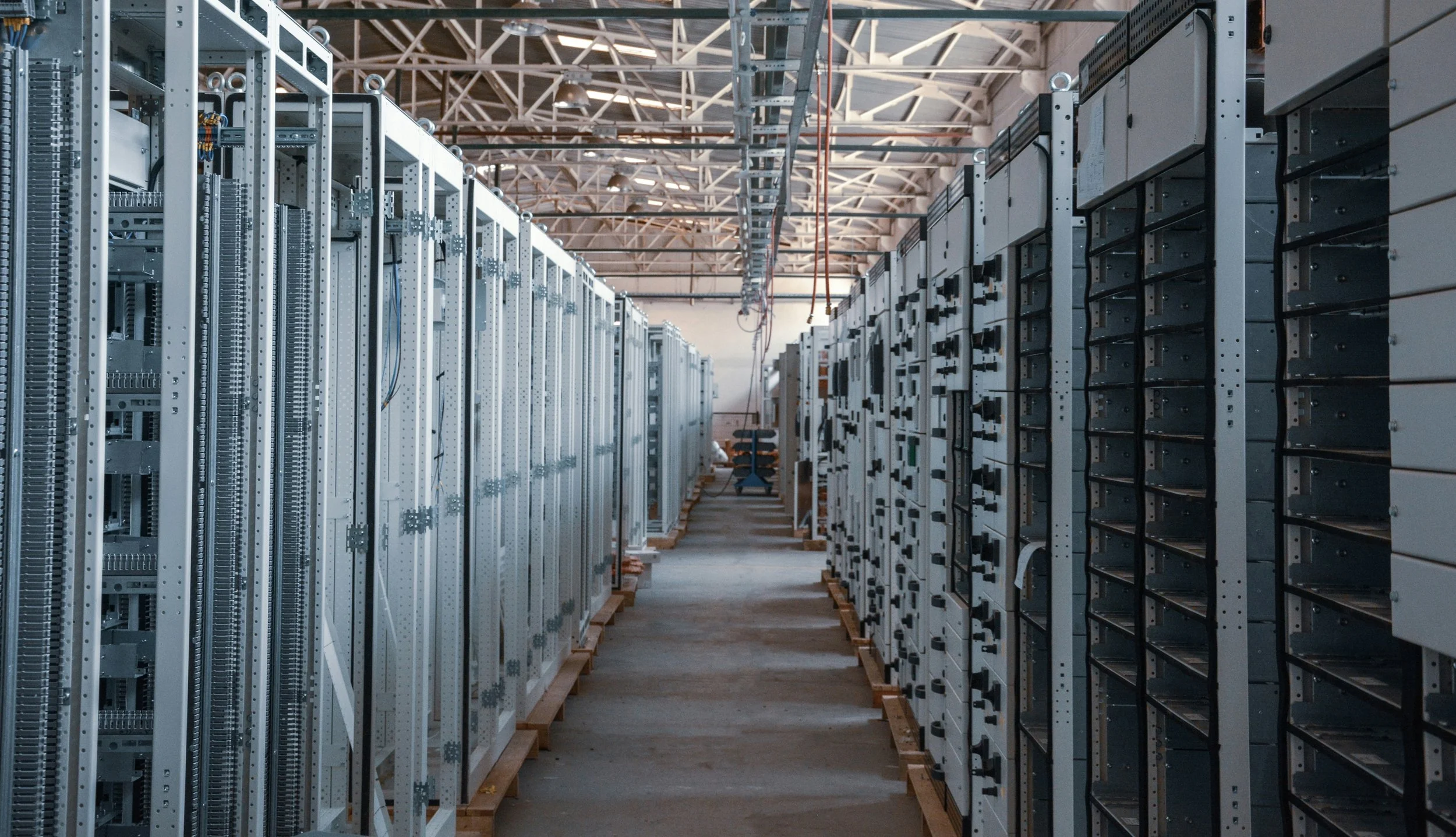
If you've driven past a large data center under construction, you may have noticed that it doesn't look like much from the outside. A big, windowless rectangle. Rows of cooling towers on the roof or in a yard. Diesel generators in metal enclosures. Security fencing. Almost nothing looks like conventional architectural design.
That exterior simplicity is misleading. Inside those buildings, the architectural and systems design challenges are among the most technically demanding in the built environment. The spatial organization, airflow architecture, physical security layering, electrical distribution layout, and life-safety design for an AI data center are all highly specific, interdependent, and unforgiving of mistakes. A layout decision made during schematic design that creates an airflow inefficiency or a security boundary conflict is the kind of problem that costs millions of dollars to fix if it's caught late, and tens of millions if it isn't caught until after the fit-out.
This post covers the architectural design considerations that distinguish AI data centers from conventional buildings. It's written for architects, engineers, and developers entering this building type for the first time, as well as for property owners and investors who want to understand what good data center design looks like and why it costs what it costs.
1. The Basic Layout Architecture
The spatial organization of a data center is driven by three hierarchies: functional, thermal, and security. Getting all three right simultaneously in the same building is the central challenge of data center architectural design.
The functional hierarchy
A data center campus or facility typically separates into a small number of distinct functional zones: the data hall, where the servers live; the critical support infrastructure, which includes the electrical distribution equipment, cooling equipment, and backup power systems that keep the data hall running; the operations and support spaces, including network operations centers, loading docks, maintenance workshops, and administrative areas; and the security zone, which controls access to all of the above.
The physical relationship between these zones determines a lot about the building's operational efficiency and resilience. Critical support infrastructure should be positioned to minimize the length of electrical and cooling distribution runs to the data halls. Longer runs mean more cable, more pipe, more heat generated in distribution, and more potential failure points. In large hyperscale facilities covering hundreds of thousands of square feet, this means the electrical distribution infrastructure needs to be distributed through the building rather than concentrated in one location. Architectural planning that treats the critical support zones as small technical rooms at the edge of a large data hall produces a fundamentally different and generally worse design than planning that distributes support infrastructure throughout the floor plate.
The thermal hierarchy
The thermal logic of a data center is the logic of moving heat out of the building as efficiently as possible. Servers generate heat. That heat has to be moved to a place where it can be rejected to the outside environment. In an air-cooled facility, the sequence is: cold air enters the bottom of a server rack from a cold aisle, flows through the equipment, exits as hot air from the back of the rack into a hot aisle, gets captured by CRAC or CRAH units, cooled by a chilled water system, and recirculated. In a liquid-cooled AI facility, the sequence is more direct: coolant is pumped to the server rack, directly absorbs heat from the chips, and carries it to a cooling distribution unit where it's transferred to the chilled water system.
The hot aisle / cold aisle containment architecture that's standard in data center design is a physical manifestation of this thermal logic. Cold aisles face each other, fed by raised floor tiles or overhead ductwork. Hot aisles face each other, separated from the cold aisle by containment panels or ceilings. Mixing hot and cold air is the enemy of cooling efficiency: it makes the cooling system work harder to maintain the inlet temperatures that the servers need, increasing energy consumption and reducing the effective cooling capacity of the facility.
For AI deployments specifically, the thermal architecture has to be designed for significantly higher heat densities than conventional server deployments. At 132 kilowatts per rack, the heat generated in a single row of racks in an AI data hall exceeds what an entire conventional data hall might generate. This changes the geometry of the thermal design: wider hot aisles to accommodate the higher flow velocity of captured heat, shorter rack rows to reduce the distance hot air has to travel, and more cooling distribution units per row of racks.
The security hierarchy
Physical security in a data center is layered, and each layer has architectural implications. The outermost layer is site perimeter: fencing, vehicle barriers, security checkpoints, and camera coverage that prevents unauthorized access to the site. The next layer is building perimeter: access control at building entry points, mantraps at key thresholds, and construction that resists forced entry. The inner layer is data hall access: badge access at data hall doors, anti-tailgating measures, and visitor escort protocols.
Each layer requires specific architectural elements. Mantraps need vestibule spaces with interlocking doors and security staff or camera coverage. Visitor holding areas need to be positioned to allow access for deliveries and maintenance personnel without requiring them to pass through data hall access points. Loading dock design needs to accommodate truck deliveries while maintaining a controlled boundary between the public-facing delivery area and the secure interior. Security camera positioning requires line-of-sight analysis that influences ceiling heights, column placement, and partition arrangements.
The Cost of Getting Airflow Wrong at Design Stage
A data center with inefficient airflow architecture doesn't announce itself as a problem at commissioning. It shows up gradually as cooling costs run higher than projected, as hot spots develop in rack rows that are getting recirculated hot air instead of cold supply air, and as the effective cooling capacity of the installed equipment is lower than its rated capacity. Diagnosing and correcting airflow problems in an operating data center is disruptive and expensive. Diagnosing them in a computational fluid dynamics (CFD) model during design is not. CFD airflow modeling during schematic and design development is standard practice for this reason, not an optional refinement.
2. The Systems Complexity That Drives Architectural Decisions
Data centers are unusual buildings because their architectural design is substantially determined by their building systems. A conventional office building has an architectural design to which the mechanical and electrical engineers respond. A data center has a mechanical and electrical system architecture to which the architect responds. Understanding the driving systems is essential for any architect working on this building type.
Power distribution: the infrastructure that shapes everything
A large AI data center might draw 100 to 500 megawatts of power from the utility grid. Getting that power to individual server racks without interruption requires an electrical distribution architecture that starts at high voltage at the utility interface and steps it down through multiple transformation stages to the low voltage that the servers use. Each transformation stage involves switchgear, transformers, UPS systems, and distribution panels that take up space, generate heat, and need to be maintained.
The routing of medium-voltage electrical distribution through the building has to be coordinated with the architectural plan from the earliest stages of design. Electrical rooms need to be accessible from maintenance corridors without passing through data halls. Transformer vaults need adequate ventilation. Generator fuel storage needs to be positioned with consideration for spill containment, fire risk, and fueling truck access. These aren't afterthoughts. They're primary spatial constraints that shape the floor plate.
Mechanical systems: cooling at scale
The cooling equipment for an AI data center at scale is not modest. Chilled water plants, cooling towers, and dry coolers occupy large footprints either on the roof or in dedicated mechanical yards adjacent to the building. The architectural design has to accommodate that equipment, including the structural loads from cooling towers and chillers, the piping routes from mechanical equipment to data halls, the ventilation requirements for indoor mechanical rooms, and the acoustic management for cooling equipment that operates continuously at high capacity.
The shift to liquid cooling for AI workloads changes the architectural relationship between cooling equipment and data halls. In an air-cooled facility, CRAC units are distributed throughout the data hall and the architectural design accommodates them as elements within the hall. In a liquid-cooled facility, the cooling distribution units are positioned at the end of rack rows and are connected by pipe runs that have to be routed through the ceiling or floor plenum. The plenum architecture, the coordination between pipe routes, cable trays, overhead structural members, and lighting, is a genuinely complex three-dimensional design problem.
Life safety: the codes haven't caught up with the loads
Data centers present fire and life safety challenges that the code frameworks haven't fully addressed for AI-era deployments. The combination of very high electrical power density, lithium-ion battery backup systems in uninterruptible power supplies, and liquid cooling systems with potential spill scenarios creates a risk profile that requires careful coordination between the architect, the fire protection engineer, and the authority having jurisdiction.
Suppression systems in data halls are typically gaseous agent systems rather than water-based sprinklers, because water and energized electrical equipment don't mix well. The selection of suppression agent, the concentration and total flooding requirements, the detection and pre-discharge alarm systems, and the ventilation provisions all have to be designed as an integrated system. In high-ceiling data halls designed for liquid cooling infrastructure, the gaseous agent calculations change significantly compared to conventional data center height assumptions. Getting this right requires fire protection engineering coordination that starts at schematic design, not as a code compliance check at the end.
3. What Good Architectural Integration Looks Like
The best data center designs aren't architectural concessions to engineering requirements. They're designs where the architectural and engineering disciplines have been genuinely integrated from the start, producing buildings that are efficient, maintainable, secure, and actually good buildings in the sense that the people who work in them can do their jobs well.
That last point is more important than it might seem. Data centers have operational staff. They have network operations center teams, security personnel, facilities maintenance technicians, and IT staff who spend full working days or nights inside these facilities. The NOC space, the break rooms, the maintenance workshops, the locker rooms: all of these spaces matter to the people who use them, and poorly designed support spaces affect staff retention, morale, and operational performance in measurable ways.
The most practically valuable architectural contributions to a data center project are ensuring adequate space for maintenance access to all critical systems (this is consistently under-planned in early design stages), designing the security layer architecture so that it works operationally without creating bottlenecks that interfere with legitimate maintenance activities, and creating NOC and staff support spaces that provide acceptable working conditions for the people who keep the building running 24 hours a day, seven days a week.
For Developers and Investors
The fastest way to understand whether an architectural team has data center experience is to ask how they handle three specific things: the coordination between electrical infrastructure routing and data hall layout, the CFD airflow modeling process, and the security zone architecture. Teams with genuine experience have detailed answers to all three. Teams without it often have general answers about flexibility and coordination that don't reflect specific knowledge of how data center design actually works. Given the construction cost and operational consequence of design decisions at this building type, the distinction matters.
Conclusion
AI data centers are driving one of the largest construction surges in the United States right now. Microsoft, Google, Amazon, Meta, and a growing field of independent operators are collectively building hundreds of facilities across the country. Most of those facilities require architectural teams who understand a building type that wasn't part of conventional architectural education even a decade ago.
The architectural challenges are real: airflow geometry, security layering, power distribution coordination, life safety integration, and the design of humane working environments within technically demanding shells. Getting them right requires specific knowledge, early coordination with MEP and structural engineering, and a design process that treats building systems as primary determinants of architectural form rather than as constraints to be accommodated after the fact.
The buildings are less interesting from the outside than almost anything else being built. Inside, they're among the most technically complex structures in the built environment. Designing them well is a genuine architectural challenge that deserves to be taken seriously.
